Why Your Joints Need a Completely Different Collagen Than Your Skin Does
Collagen for skin comes in gram-sized scoops. The version with the strongest clinical backing for joints comes in 40 milligrams — roughly 1/100th of a teaspoon. That is not a typo. It is a different protein doing a completely different job in the body.
“Collagen” on a supplement label is shorthand for at least 16 distinct proteins, and the two that matter for shoppers are Type I/III and Type II. Type I and III dominate the skin, hair, and nail category — the hydrolyzed peptide powders you stir into coffee, dosed by the gram because they are meant to flood the bloodstream with amino acid building blocks. Type II is structural cartilage collagen, and the joint-health products built around it work by an entirely different mechanism, which is why the effective dose looks nothing alike.
Hydrolyzed Type I/III peptides are broken down into short amino acid chains small enough to absorb through the gut wall, then circulated to tissue that can use them as raw material and as a signal that tells skin fibroblasts to ramp up their own collagen production. That absorb-and-signal model is why those products run 2.5 to 15 grams a day — you need enough circulating peptide to matter.
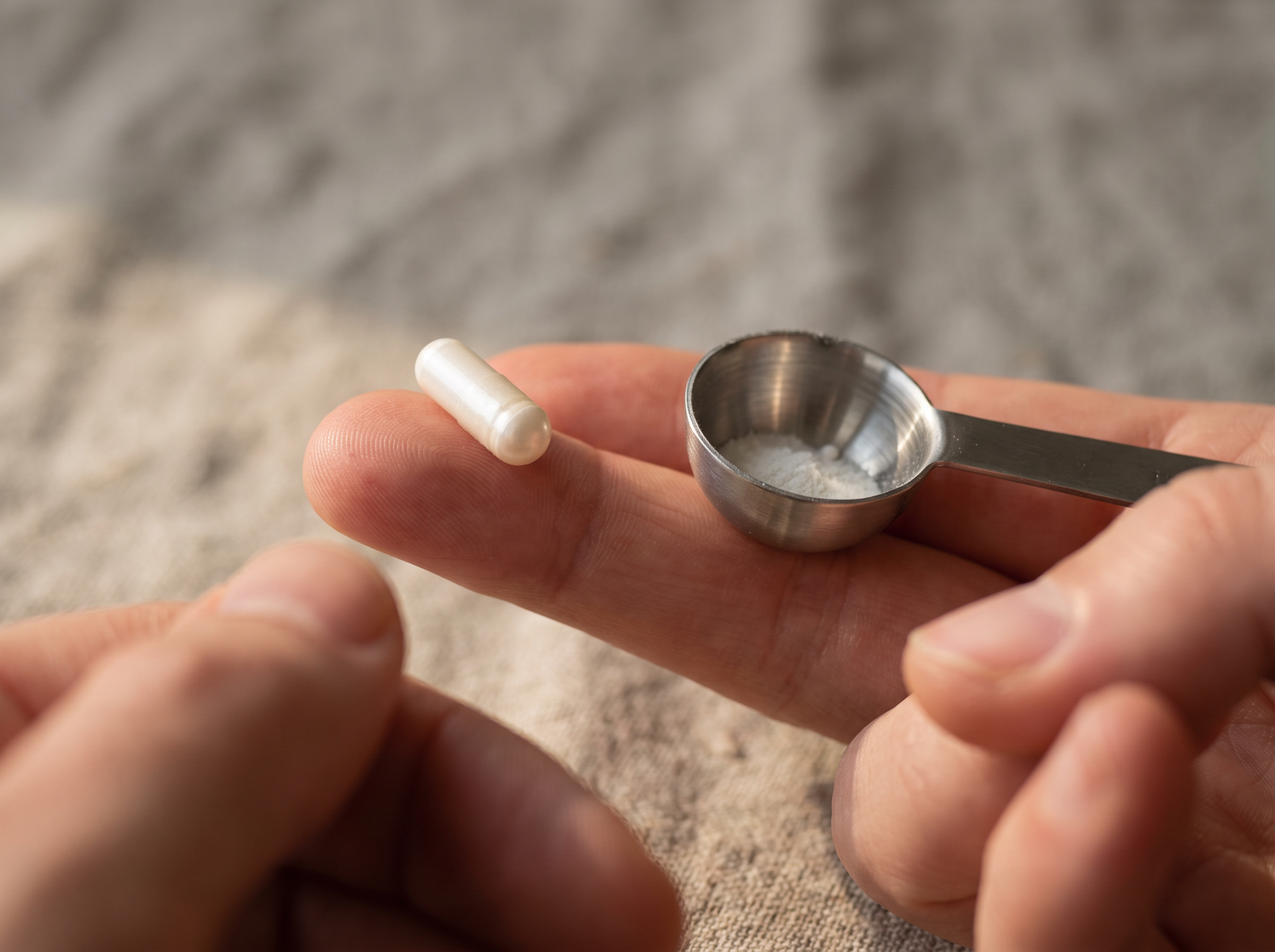
Undenatured type II collagen (sold under the ingredient name UC-II) does not work that way at all. It is deliberately kept in its native, undenatured three-dimensional structure rather than broken down, and in that form it is not meant to be absorbed as a building block. Instead, tiny amounts of it interact with gut-associated immune tissue in the small intestine — the Peyer’s patches — in a process called oral tolerance, essentially retraining the immune system to stop treating the body’s own joint cartilage as a target. That is a signaling dose, not a nutritional one, and it is why the research keeps landing on milligrams instead of grams.
Who actually needs type II collagen
The clearest candidates are people managing knee or joint stiffness tied to osteoarthritis, aging athletes dealing with post-activity joint soreness, and anyone whose joint discomfort hasn’t responded to glucosamine and chondroitin. This is a narrower, more specific audience than the general “aging skin” market that Type I/III peptides are sold to.
The two are not interchangeable, and this is where a lot of supplement shopping goes wrong. Taking a gram-level dose of Type I/III peptides will not produce the oral-tolerance effect studied for joints — it is the wrong protein structure delivered the wrong way. Taking 40mg of UC-II will not rebuild your skin’s collagen stores either, because 40mg of anything is far too little to serve as raw material. If you want both benefits, you need both products at their own studied doses, not more of one.

How much undenatured type II collagen actually works
The best-known trial here is Lugo et al. (2016, Nutrition Journal), a 13-center, randomized, double-blind, placebo-controlled study that ran 191 participants with knee osteoarthritis through 180 days on one of three arms: 40mg/day UC-II, 1,500mg glucosamine HCl plus 1,200mg chondroitin sulfate, or placebo. UC-II beat placebo on total WOMAC score (p=0.002), pain (p=0.0003), stiffness (p=0.004), and physical function (p=0.007) — and in the study’s primary analysis, it also outperformed the glucosamine/chondroitin combination on total WOMAC (p=0.04), pain (p=0.016), and stiffness (p=0.044).
Worth knowing before you treat that as a settled slam dunk: under some of the study’s secondary statistical models, the UC-II advantage over glucosamine/chondroitin did not reach significance, and two of the study’s authors were affiliated with InterHealth Nutraceuticals, the company that holds the UC-II patent and supplied the study materials. None of that erases the placebo-controlled result, but it is the kind of funding detail worth disclosing rather than glossing over. What it does confirm is the dose that matters: 40mg/day, not a gram count.
Type II alone vs. Type I/III + Type II: what changes
Taking only a joint-dosed UC-II product will do nothing for skin elasticity, and taking only a skin-dosed Type I/III peptide will do nothing for the oral-tolerance mechanism studied in knee osteoarthritis — the same lesson our earlier piece on why collagen alone doesn’t rebuild anything found for Type I/III and vitamin C, just applied to a different pairing. A “multi-collagen” blend that lists five collagen types on one label is convenient, but it rarely discloses enough of any single type to hit either product’s efficacious dose, so treat these as two separate purchases with two separate jobs, not one product doing double duty.
What to look for in a joint collagen product
A few concrete checks, in order of how often products fail them:
- The label states 40mg of UC-II, not a vague “collagen complex.” Some products bury the undenatured type II collagen inside a larger blend of minerals or other joint ingredients without disclosing how much is actually UC-II.
- It says “undenatured,” not just “type II collagen.” Heat and processing denature the protein’s native structure, which is the entire basis of the oral-tolerance mechanism — a denatured version is a different ingredient wearing the same name.
- Third-party testing is actually named. “Third-party tested” with no lab, agency, or certificate you can look up is a weaker claim than it sounds.
- It’s a single-ingredient formula. That way you know exactly what dose you’re getting rather than estimating how much of a blended “joint complex” is UC-II specifically.
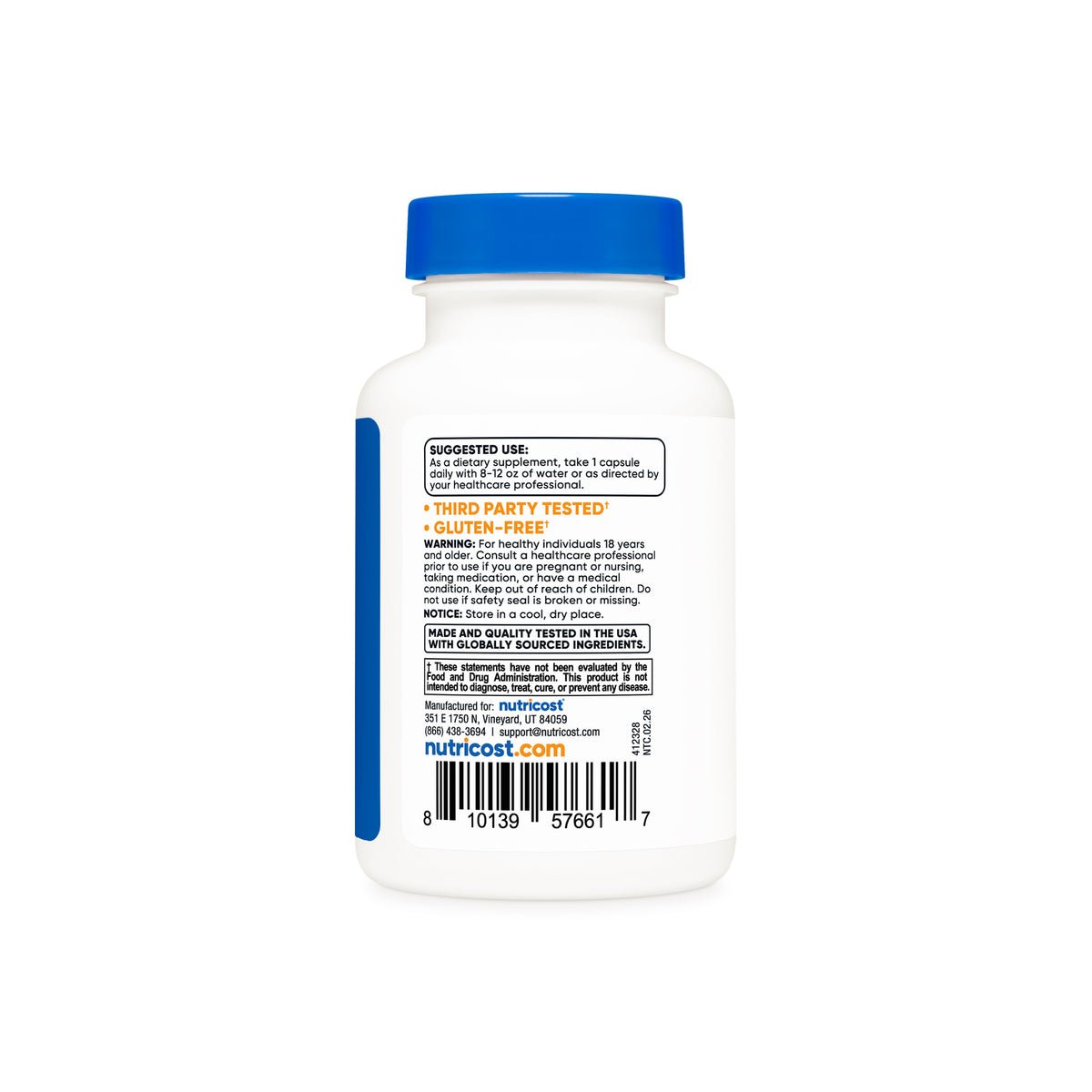
This is the combination we found in Nutricost’s UC-II Collagen: the exact 40mg dose from the pivotal trial, no padding ingredients diluting the label, and manufacturing in an NSF-certified, GMP-compliant facility with an independent-lab testing claim attached — even though, as with many joint-category products, that lab isn’t named on the label.
Delivers the exact 40mg undenatured type II collagen dose used in the pivotal joint trial, as a single-ingredient capsule manufactured in an NSF-certified facility with an independent-lab testing claim.
FAQs
Can I just take a higher dose of regular collagen peptides instead of a separate UC-II product?
No. Hydrolyzed Type I/III peptides work by circulating as amino acid building blocks at gram-level doses; undenatured Type II collagen works through a gut-immune oral-tolerance mechanism at a milligram-level dose. Taking more of one doesn’t substitute for the other — they’re different proteins triggering different biology.
How long before I’d notice a difference in joint comfort?
The pivotal trial ran a full 180 days before drawing its conclusions, so plan on evaluating this over months, not weeks. Some participants showed earlier signals, but the study’s own timeline was built around a six-month window, and that’s the honest expectation to set.
Is UC-II better than glucosamine and chondroitin?
In the largest head-to-head trial, UC-II outperformed a standard glucosamine-plus-chondroitin regimen on the primary analysis, though the advantage didn’t hold up under every secondary statistical model the researchers ran, and the study’s funding came from UC-II’s patent holder. It’s among the better-supported options, especially if glucosamine and chondroitin haven’t worked for you, but it isn’t an unambiguous knockout.
Is undenatured type II collagen safe if I have a chicken or poultry allergy?
No — UC-II is sourced from chicken sternum cartilage, so anyone with a chicken or poultry allergy should avoid it and talk to a doctor about alternatives. This sourcing is also why the ingredient isn’t vegan or vegetarian-friendly.
If you’ve been taking high-dose glucosamine and chondroitin, or a gram-level Type I/III peptide powder, without any real change in joint stiffness, this is the dose-matched, mechanism-matched product worth asking your doctor about next — and it’s worth giving it the full six-month window the research used before judging whether it’s working.
As an Amazon Associate, The Health Verdict earns from qualifying purchases. This article is educational and is not medical advice — talk to your doctor before starting any new supplement, especially if you have a chicken or poultry allergy, since UC-II is sourced from chicken sternum cartilage.