Trans-Resveratrol Alone vs. Trans-Resveratrol with Piperine: Why Most of the Dose Never Reaches Your Blood
Resveratrol absorbs into your gut just fine. The problem shows up an hour later, when your liver quietly converts almost all of it into a form your body can no longer use.
Resveratrol earned its reputation as “the red wine molecule” when researchers tried to explain why moderate wine drinkers in parts of France seemed to dodge some of the cardiovascular damage a diet that rich in saturated fat should cause. Years of lab and animal work later, it’s been shown to activate sirtuin enzymes, calm inflammatory signaling, and act as a potent antioxidant in a petri dish. None of that tells you what happens once you actually swallow a capsule of it.
The best human data on that question comes from a small, frequently cited 2004 trial: six volunteers given a radiolabeled 25 mg dose, with blood and urine tracked afterward. At least 70% of it was absorbed across the gut wall — resveratrol gets in just fine. But almost none of it stayed usable: unchanged resveratrol never exceeded trace amounts in plasma, because the intestine and liver convert it, within hours, into glucuronide and sulfate metabolites. The researchers identified rapid sulfate conjugation as the rate-limiting bottleneck. Resveratrol doesn’t have an absorption problem — it has a your-body-clears-it-like-a-toxin problem.
That distinction matters more than the mg number on the label. A 500 mg “resveratrol complex” built on an unstandardized extract and a 100 mg capsule of 98%-pure trans-resveratrol deliver wildly different amounts of the one compound actually being studied — and neither guarantees meaningful blood levels once your liver gets to it. Which is why recent research has focused less on raising the dose and more on slowing the metabolism that destroys it.
Who actually needs this
Most buyers are chasing one of two things: a longevity hedge built on the sirtuin-activation research, or a cardiovascular and metabolic play built on antioxidant and anti-inflammatory activity in cell and animal studies. Both are real research areas. Neither has produced a large, long-duration human trial tracking actual outcomes — heart attacks, cognitive decline, lifespan — rather than blood biomarkers.
Where the evidence is more concrete: several small human trials found resveratrol improves markers like endothelial function, insulin sensitivity, and inflammation in overweight or metabolically unhealthy adults, usually at 150 mg to 1 g daily over one to three months. If you’re healthy with normal metabolic markers, you’re supplementing on a thinner evidence base.

What dose has actually been tested
Trials have used doses from under 200 mg to several grams daily, and the two ends behave very differently. Below roughly 1 gram daily, side effects are rare. Above 2.5–5 grams, trials report nausea, gas, and diarrhea — your gut isn’t built to process that much plant polyphenol at once.
The high-dose end carries a more serious flag: a trial of a high-dose micronized formula in multiple myeloma patients was stopped after serious adverse events that included renal failure. That doesn’t mean a standard 150–500 mg capsule carries kidney risk — it means “more is better” is the wrong instinct here, and nobody should stack multiple products or chase gram-level doses without medical supervision.
Trans-Resveratrol Alone vs. Trans-Resveratrol + Piperine: What Changes
In a 2011 study, mice received resveratrol alone or combined with piperine at a 10-to-1 ratio, then had blood levels tracked. Piperine increased resveratrol’s overall blood exposure (AUC) to roughly 229% of the resveratrol-alone group and its peak concentration to over 15 times higher — researchers hypothesized piperine inhibits the same glucuronidation pathway flagged as resveratrol’s bottleneck in the human study above. It’s a plausible mechanism built on a real, oft-cited paper — but it’s mouse data, not human, and “15 times higher” shouldn’t be read as a number that transfers directly to a person. There’s a real tradeoff buried in that convenience, too: piperine itself inhibits the CYP3A4 liver enzyme that metabolizes a long list of prescription drugs, so adding it changes more than just resveratrol’s fate.
What to look for in a resveratrol product
This category has a specific, well-documented quality problem: a 2024 round of independent testing on resveratrol supplements sold on Amazon found that most delivered far less trans-resveratrol than their labels claimed. Here’s what separates a trustworthy bottle from the rest, in order of how often products fail each one:
- States the actual trans-resveratrol amount, not just total extract weight. “Resveratrol Complex, 500 mg” tells you little if the label doesn’t separately disclose how much is trans-resveratrol versus inert plant fiber — a common way cheaper SKUs obscure a weak dose.
- Names a specific, standardized plant source. Look for a stated percentage — “Polygonum cuspidatum root extract standardized to 50% resveratrol” — rather than a vague “red wine extract” with no standardization claim attached.
- Carries independent verification, not just an in-house claim. Very few resveratrol products hold a current NSF, USP, or ConsumerLab certification; a company’s own “tested for purity” language isn’t the same thing, and that gap matters more here given the finding above.
- Keeps the ingredient list short and specific. A clean two- or three-ingredient formula is easier to trust, and easier for a lab to verify, than a ten-compound “longevity blend” where nothing is dosed at a trial-tested level.
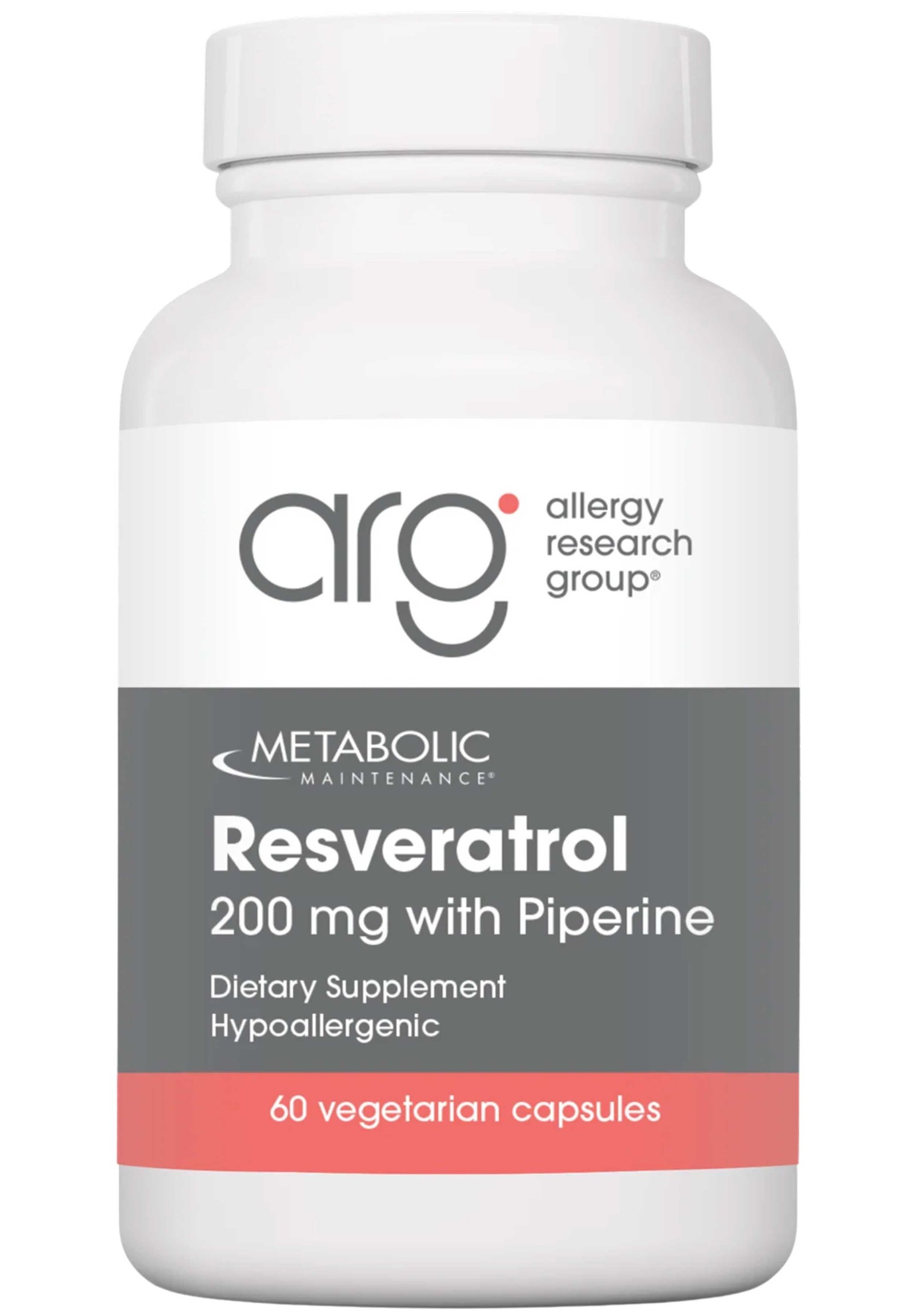
Today’s product passes the first two cleanly — 200 mg trans-resveratrol per capsule from a standardized 50% knotweed extract, plus a dosed, named piperine source — and keeps its ingredient list to four items with no fillers. It lacks an independent NSF or USP certification, the one box nothing in this category closes easily right now.
A cleanly dosed, transparently labeled resveratrol-piperine combination from a long-standing practitioner brand — held back from a clean recommendation only by the lack of independent lab verification this category badly needs.
FAQs
Does resveratrol actually slow aging, or is that overstated?
The sirtuin-activation research that made resveratrol famous comes almost entirely from yeast, worm, fly, and rodent studies — organisms with very different metabolisms and lifespans than humans. No human trial has shown resveratrol extends lifespan or reliably slows an aging biomarker over years. It’s a compound with a genuinely interesting mechanism and no proven human longevity benefit yet, not an anti-aging pill.
Should I take resveratrol with piperine, or will it cause problems with my medications?
Piperine inhibits the CYP3A4 liver enzyme that metabolizes many common prescription drugs, including some statins, blood pressure medications, and immunosuppressants. If you take any daily prescription, ask your pharmacist or doctor whether piperine is a concern before adding a resveratrol-piperine combination — it’s a more relevant interaction than most buyers assume.
Is a glass of red wine a good substitute for a resveratrol supplement?
No. A typical glass of red wine contains roughly a hundredth to a thousandth of the trans-resveratrol in a single 100–200 mg capsule, and alcohol carries its own, separate health tradeoffs. Wine is where resveratrol was discovered, not a practical way to dose it.
Who should avoid resveratrol supplements altogether?
Anyone on warfarin or another blood thinner, since resveratrol has antiplatelet activity that can raise bleeding risk; anyone with a hormone-sensitive cancer history, given resveratrol’s estrogen-receptor activity; and anyone on a CYP3A4-metabolized medication who hasn’t checked with their prescriber. None of these rule out resveratrol permanently — they rule out starting it without that conversation.
If you’re generally healthy, not on blood thinners or hormone-sensitive-cancer treatment, and curious about resveratrol’s metabolic research rather than expecting a dramatic result, a clearly labeled 150–300 mg trans-resveratrol dose — with or without piperine — is a reasonable, low-risk experiment to run past your doctor first. If you’re already managing a chronic condition or taking daily prescriptions, that conversation should happen before the bottle does.
As an Amazon Associate, The Health Verdict earns from qualifying purchases. This article is educational and is not medical advice — talk to your doctor before starting any new supplement, especially if you take blood thinners, hormone therapy, or any medication metabolized by the liver’s CYP3A4 enzyme.