Selenomethionine vs. Selenite: Why the Form of Your Selenium Supplement Changes What It Actually Does
Two bottles can say the exact same “200 mcg selenium” on the front label and put genuinely different chemicals into your body. The ingredient buried on the back is the part that actually matters.
Selenium’s whole job in the body runs through roughly 25 selenoproteins — enzymes that only fold correctly when selenium is sitting inside them as part of a specific amino acid called selenocysteine. Two of the best-studied groups are the glutathione peroxidases, which mop up the reactive byproducts of ordinary metabolism before they damage cells, and the iodothyronine deiodinases, the enzymes that convert the thyroid’s storage hormone T4 into its active form, T3. A real selenium deficiency doesn’t announce itself as low energy or dry skin — it shows up as impaired antioxidant defense and a thyroid that can’t activate the hormone it already has.
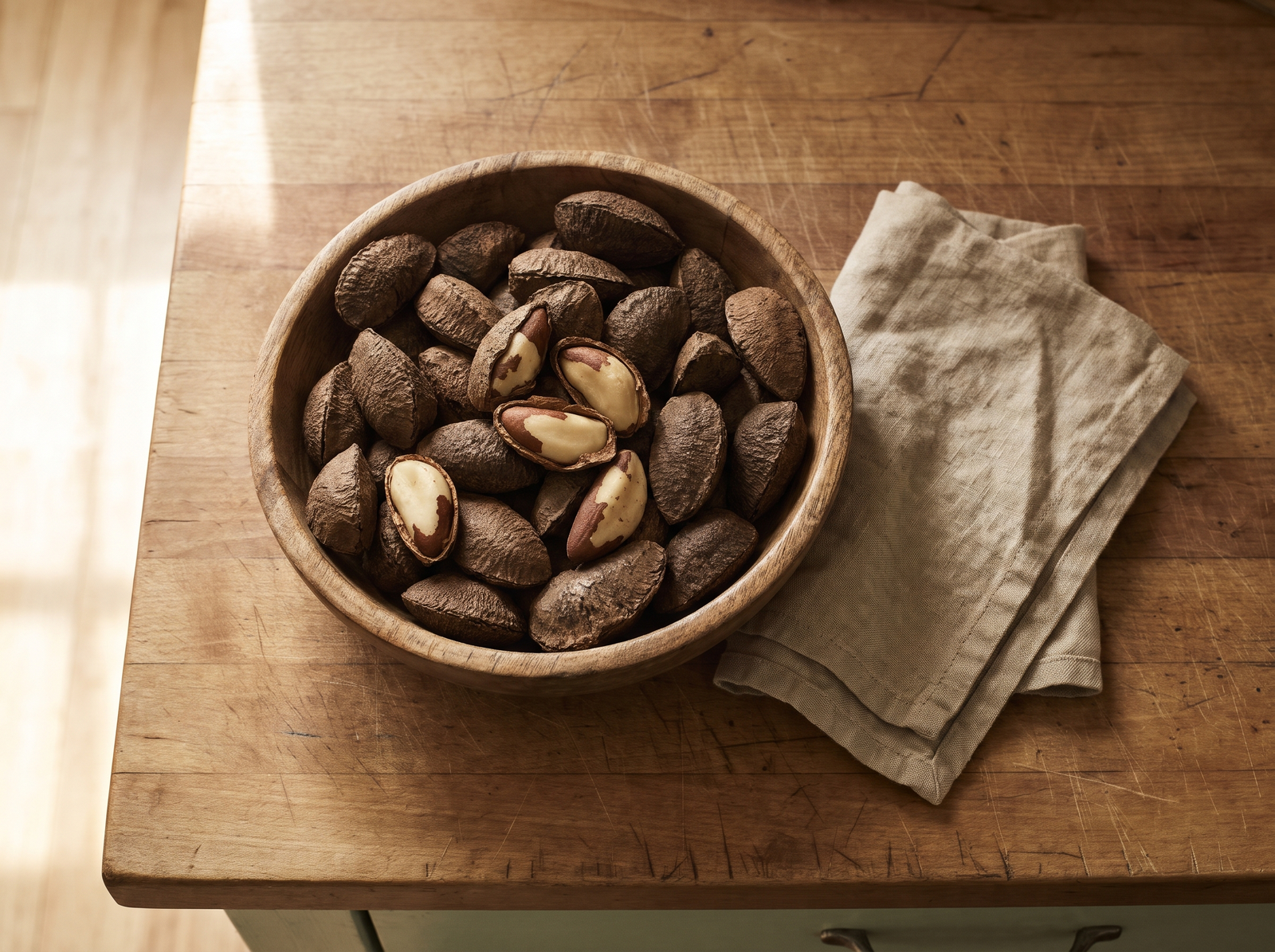
How much selenium ends up in food depends almost entirely on how much selenium was in the soil a plant grew in, and that number swings wildly by region. Parts of the U.S. Great Plains sit on selenium-rich soil; parts of central China and other regions sit on soil so selenium-poor that a severe childhood cardiomyopathy called Keshan disease was eventually traced back to it. One consequence most people never think about: a couple of Brazil nuts, grown in selenium-rich South American soil, can deliver several times a full day’s requirement in a single handful, while a diet built almost entirely around low-selenium-soil produce can run genuinely short.
That soil-dependent variability is also why selenium supplements come in two chemically different forms, and why the difference isn’t marketing trivia. Selenomethionine is the organic form selenium takes naturally inside plants, where it substitutes for sulfur in the amino acid methionine. Sodium selenite is an inorganic mineral salt — selenium bonded directly to oxygen — that’s cheaper to manufacture and has been used in supplements and animal feed for decades. The body doesn’t treat these the same way once they’re swallowed, and that difference shows up directly in how much selenium a given dose actually delivers.
Who Actually Needs a Selenium Supplement
For most adults eating an ordinary varied diet in the U.S. or Canada, selenium intake from food alone already clears the daily requirement — grains, meat, seafood, and eggs all contribute, and that’s before anyone reaches for a Brazil nut. Piling a supplement on top of an already-adequate diet doesn’t add a safety margin; selenium’s gap between a helpful dose and a harmful one is narrower than most minerals, so unnecessary supplementation mostly just narrows the room for error.
The people selenium supplementation is actually built for are narrower: those managing autoimmune thyroid conditions like Hashimoto’s thyroiditis under a doctor’s supervision, vegans and vegetarians whose diet leans heavily on produce grown in low-selenium soil, and people with malabsorption conditions — Crohn’s disease, short bowel syndrome, or long-term dialysis — where the gut isn’t reliably picking up what’s eaten. None of those are self-diagnosed situations; they’re reasons to bring selenium up with a doctor, not reasons to start dosing on a hunch.
The Research-Backed Dose — and Why More Isn’t Automatically Better
200 micrograms a day is the dose that shows up again and again in selenium research, and it’s not an arbitrary round number. A 2010 meta-analysis pooling six controlled trials and 339 people with Hashimoto’s thyroiditis found that 200 mcg/day of selenium for three months dropped thyroid peroxidase (TPO) antibody levels by 71.6% compared with placebo (120.19 vs. 421.98 IU/mL, a highly statistically significant gap). The same analysis noted something worth sitting with: the benefit plateaued at three months, with no further improvement from staying on it longer.
The ceiling side of the dose matters just as much. The adult RDA for selenium is 55 mcg/day; the Tolerable Upper Intake Level — covering food and supplements combined — is 400 mcg/day. A large cancer-prevention trial (SELECT) used 200 mcg/day of selenomethionine and found no reduction in cancer risk, and an earlier trial, the Nutritional Prevention of Cancer trial, linked that same 200 mcg/day dose to a measurably higher rate of type 2 diabetes among the people randomized to take it. Selenium doesn’t follow the usual “more is better” curve that applies to a nutrient like vitamin C — it’s a narrow-window nutrient, which is exactly why matching a studied dose beats rounding up for insurance.
Selenomethionine vs. Selenite: What Changes
A randomized trial in selenium-deficient adults compared the two forms directly and found that it took almost twice as much sodium selenite as selenomethionine to fully restore glutathione peroxidase activity — the clearest head-to-head evidence that the forms aren’t interchangeable milligram for milligram. The mechanism comes down to how each one travels through the body: selenomethionine gets non-specifically swapped in for the amino acid methionine throughout the body’s ordinary proteins first, building a slow-release reserve that keeps blood selenium elevated longer, while selenite is reduced directly to hydrogen selenide and funneled straight into new selenoprotein production with no reserve pool behind it. Selenite isn’t “worse” at its one job — it’s just used immediately and not stored, which is why most of the clinical research, including the thyroid studies above, is built on selenomethionine specifically.
What to Look for in a Selenium Supplement
Scroll an Amazon selenium search and most bottles look interchangeable — 200 mcg, one capsule, under fifteen dollars. The differences that actually matter are in smaller print, and they fail in a predictable order.
- Form. Look for “selenomethionine” or “L-selenomethionine” named specifically on the Supplement Facts panel, not just “selenium” with the actual compound buried — or omitted — in fine print. The organic form is the one the bioavailability and thyroid research above was actually testing.
- Dose matched to research, not stacked past it. 200 mcg lines up with the clinical studies; some “mega-antioxidant” blends fold selenium in alongside several other minerals at doses that push total daily intake higher without anyone adding it up against the 400 mcg ceiling.
- A named testing standard, not a vague claim. “Third-party tested” printed on a label means nothing on its own — look for a specific registration like NSF/ANSI 173 or a batch-specific Certificate of Analysis rather than marketing language alone.
- No unnecessary stacking or allergens. Selenium bound to yeast (“selenium yeast”) is fine for most people but worth avoiding if you’re yeast-sensitive; a clean, short ingredient list is a reasonable tiebreaker between similar products.
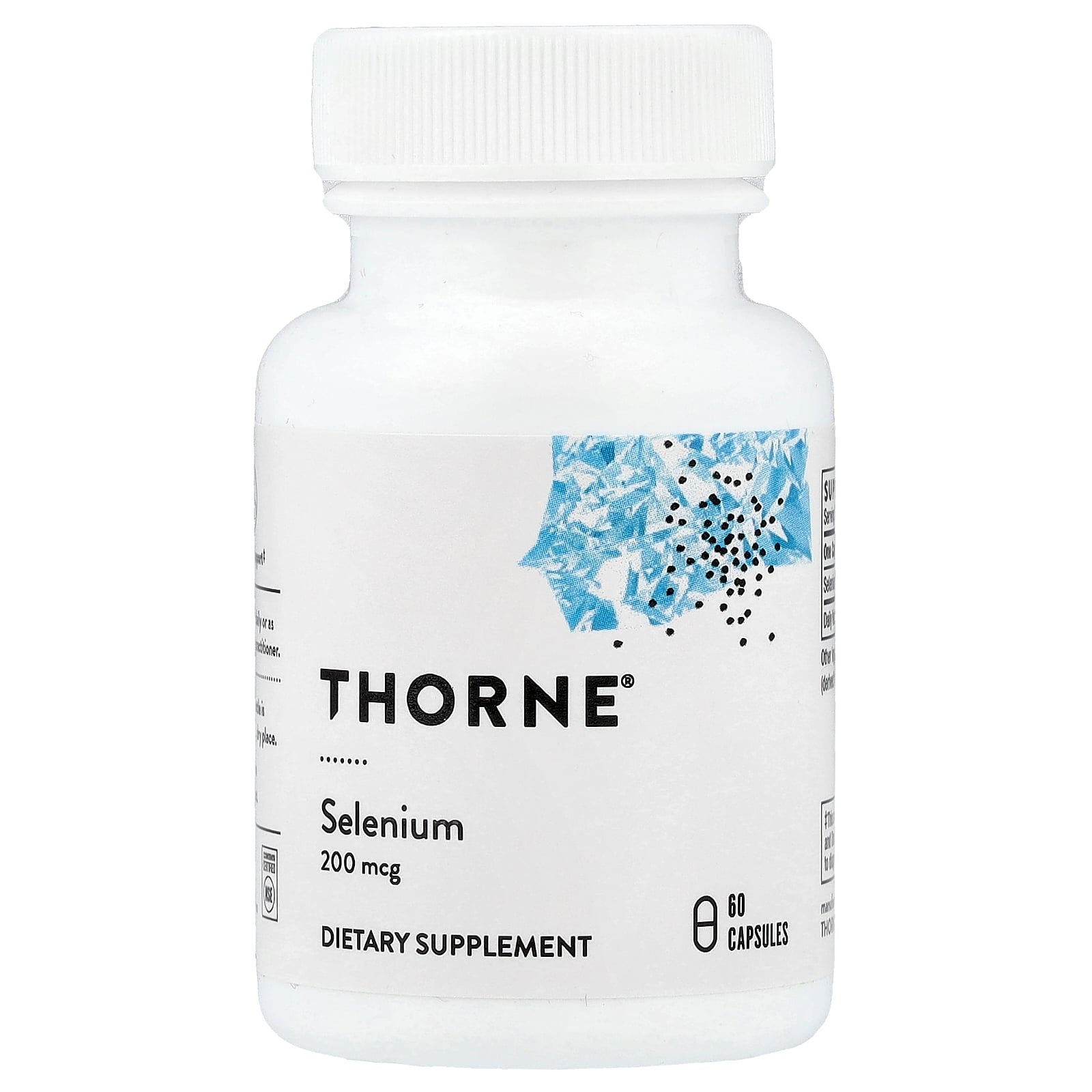
Thorne’s Selenium clears the first two points cleanly — it names L-selenomethionine specifically on the label and doses it at the same 200 mcg used in the thyroid research above — and it’s made in an NSF/ANSI 173-registered facility with batch testing behind it. The one gap worth naming rather than glossing over: it doesn’t carry NSF’s separate Certified for Sport credential, which matters specifically to competition-tested athletes and barely at all to everyone else.
A correctly-dosed, correctly-formed selenium supplement from an established maker — 200 mcg of L-selenomethionine, the form and dose the clinical thyroid research above actually used. It isn’t NSF Certified for Sport, so competition-tested athletes should look elsewhere, but that’s a narrow caveat for the average buyer.
FAQs
Is 200 mcg of selenium safe to take every day?
For most adults, yes — 200 mcg from a supplement plus an ordinary diet’s roughly 90–130 mcg still lands comfortably under the 400 mcg daily ceiling that covers food and supplements together. The one wrinkle: if you regularly eat Brazil nuts, check your total, since a handful alone can rival or exceed a full day’s dose.
Should I choose selenomethionine or sodium selenite?
Selenomethionine, if the label gives you a choice. It’s the form most of the bioavailability and thyroid research is built on, and head-to-head testing found it took nearly double the dose of selenite to match its effect on selenoprotein activity.
Will selenium help my thyroid if I have Hashimoto’s?
The best evidence available — a meta-analysis of six trials in 339 people — found a meaningful drop in thyroid antibody levels at 200 mcg/day over three months, with no extra benefit from continuing past that point. It’s not a substitute for thyroid medication, and the decision to add it belongs in a conversation with the doctor managing your thyroid, not a solo decision based on a blog post.
Can I get enough selenium from food without supplementing at all?
In most of the U.S. and Canada, yes — ordinary intake of meat, seafood, eggs, and grains clears the 55 mcg RDA for most people without any extra effort, and a Brazil nut or two covers the rest. Vegans and vegetarians eating mostly produce from low-selenium soil, and people with malabsorption conditions, are the groups where food alone sometimes falls short.
If you fall into one of the actual use cases above — diagnosed autoimmune thyroid disease, a selenium-poor plant-based diet, or a malabsorption condition — a 200 mcg selenomethionine capsule backed by the research above is a reasonable, low-cost thing to bring up with your doctor. If none of those apply, the more useful move is probably just eating a Brazil nut twice a week and leaving the bottle on the shelf.
As an Amazon Associate, The Health Verdict earns from qualifying purchases. This article is educational and is not medical advice — talk to your doctor before starting any new supplement, especially if you take thyroid medication or have an autoimmune thyroid condition.