Quercetin Dihydrate vs. Phytosome: Why Most Bottles Waste Most of the Dose
Quercetin shows up in nearly every allergy-season supplement list and half the longevity stacks on the internet — but the dirt-cheap dihydrate powder filling most bottles barely makes it into your bloodstream before your body breaks it down.
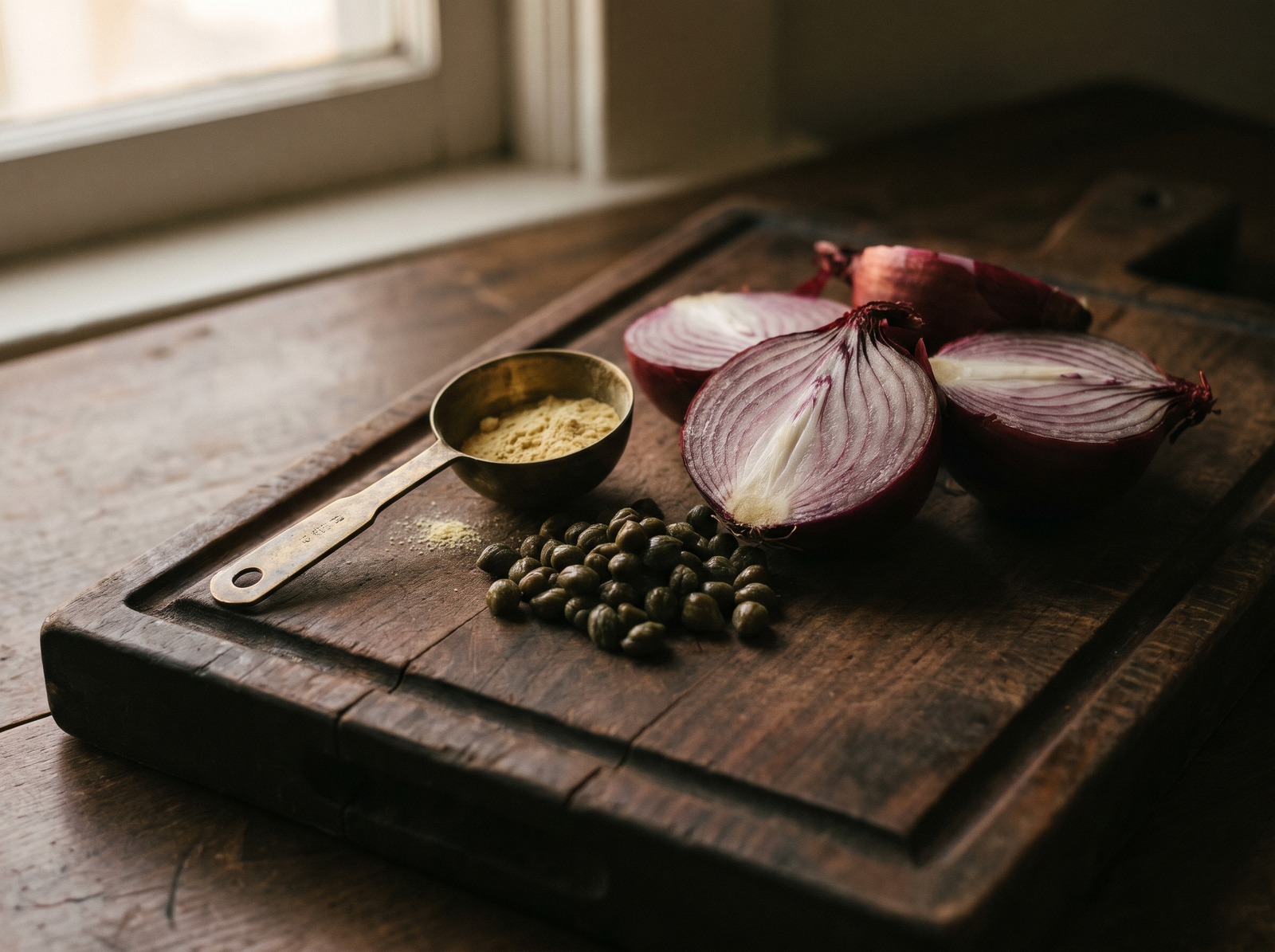
Quercetin is a plant flavonoid pulled from onions, apples, capers, and citrus peels, and it’s one of the more mechanistically interesting compounds in the supplement aisle — not a vague “antioxidant” buzzword, but a molecule that measurably blocks the COX and LOX enzyme pathways that drive inflammation, and interferes with how mast cells release histamine, which is why it shows up in nearly every seasonal-allergy stack. Early interest in senescent-cell biology has also put it in some longevity protocols, generally paired with other compounds rather than used alone.
The problem has never been whether quercetin does something in a test tube. It’s whether a swallowed capsule gets enough of it into your blood to matter. Quercetin is poorly water-soluble, and a meaningful share of an oral dose gets broken down by gut bacteria or cleared in first-pass liver metabolism before it ever reaches circulation — pharmacokinetic researchers at Indena, the Italian ingredient manufacturer, have put the figure at roughly 20% of a standard dose actually reaching the bloodstream intact.
That’s the gap the “phytosome” form is built to close. Instead of plain quercetin dihydrate powder — the crystalline form filling most big-bottle capsules — some manufacturers complex the quercetin molecule with phosphatidylcholine, a phospholipid pulled from sunflower lecithin, which helps the combined molecule slip across the intestinal wall rather than getting degraded in the gut. It’s the same underlying flavonoid; it’s just packaged so more of it survives the trip.
Who Actually Needs This
Quercetin is most worth considering for two overlapping groups: people managing seasonal allergy symptoms who want something to try alongside — not instead of — standard antihistamines, and people interested in quercetin’s role in post-exercise oxidative-stress recovery. A 2018 study in Nutrition Research found quercetin supplementation blunted the oxidative-stress response to eccentric exercise compared with placebo.
It’s a weaker fit for anyone expecting a dramatic, fast-acting effect. The research behind quercetin is real but modest — this is a flavonoid that nudges inflammatory and histamine pathways, not a drug that shuts them off — and if you’ve tried a basic quercetin capsule before and felt nothing, the dihydrate-vs-phytosome absorption gap described above is a more likely explanation than “quercetin doesn’t work.”

How Much Quercetin Actually Works
Most of the human research on quercetin’s dihydrate form uses doses in the 500–1,000 mg per day range, often split into two doses. A University of Utah trial published in the Journal of Nutrition (2007) found that 730 mg of quercetin per day measurably lowered blood pressure in overweight and obese adults with hypertension over several weeks of use.
Because the phytosome form reaches the bloodstream so much more efficiently, it doesn’t need to match those milligram counts to produce comparable blood levels. The only published human pharmacokinetic comparison — a 2018 study by Indena researchers in 12 healthy adults — found Quercetin Phytosome produced blood concentrations up to 20 times higher than an equal dose of unformulated quercetin. In practice, that’s why phytosome products are typically sold in 250 mg capsules taken two to three times a day (500–750 mg total) rather than the 1,000-mg-plus doses common with dihydrate powder.
Quercetin Dihydrate vs. Quercetin Phytosome: What Changes
Dihydrate is quercetin in its plain crystalline form — genuinely the same flavonoid, and the cheaper option for a reason: it’s harder for your body to absorb. Phytosome technology wraps that same molecule in a phospholipid carrier that helps it cross the gut lining intact, and the one human pharmacokinetic study that’s measured the difference found it translates into dramatically higher blood levels, not just a marketing claim. The trade-off is price — phytosome-form capsules typically cost two to three times as much per milligram as plain dihydrate powder — and whether that’s worth it depends on whether you’re taking quercetin for a reason that actually needs it to reach your bloodstream.
What to Look for in a Quercetin Product
Most quercetin supplements fall short on one of four points, roughly in order of how often we see it go wrong:
- Delivery form disclosed. Many labels just say “Quercetin 500 mg” with no mention of a delivery technology — if the label doesn’t name one, assume it’s the cheaper, poorly-absorbed dihydrate powder.
- Dose given per single ingredient, not buried in a blend. Allergy-support “proprietary blends” often list quercetin behind a long ingredient list with no individual dose disclosed, making it impossible to know if you’re getting a meaningful amount.
- Third-party oversight somewhere in the supply chain. GMP certification or an independent contents-certification program matters more here than with cleaner-cut ingredients like a single mineral, since flavonoid raw materials vary more in purity and lot-to-lot consistency.
- Serving guidance that matches studied doses. A token “take one daily” that falls well short of research amounts isn’t dosed to do anything measurable.
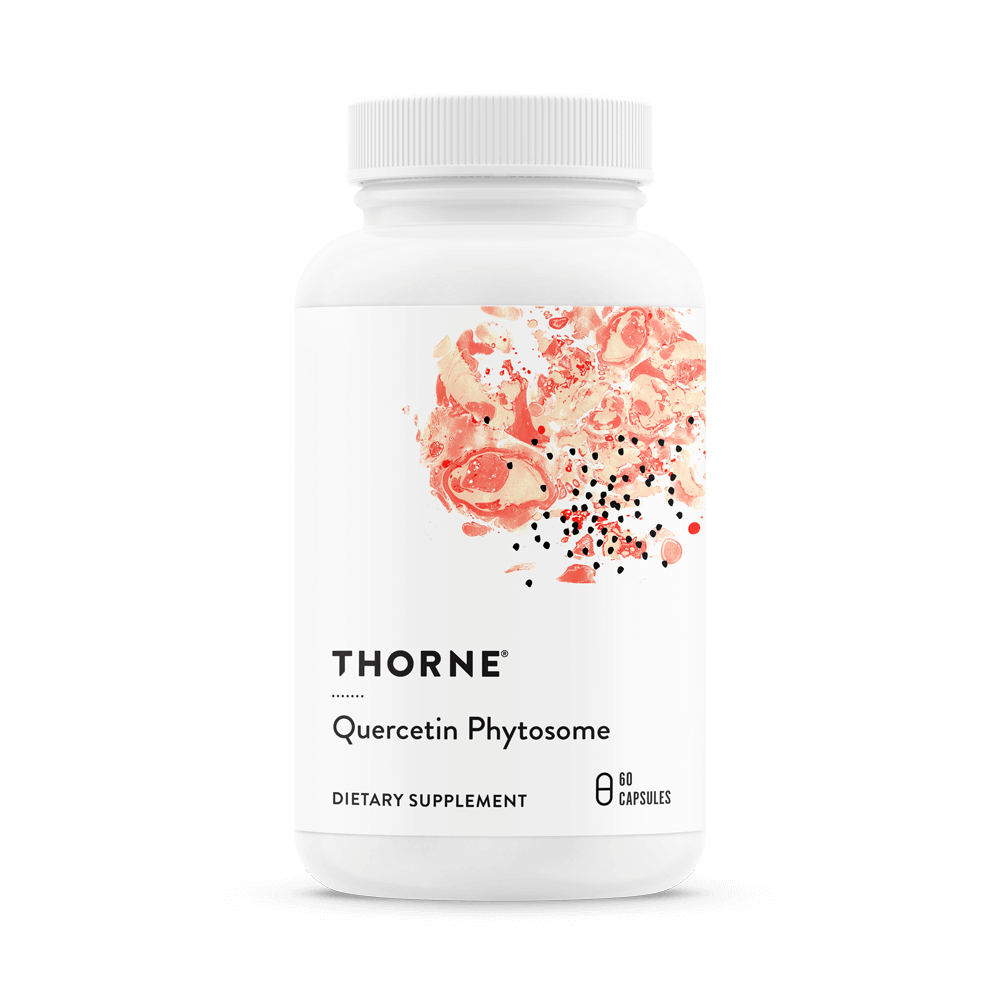
Thorne’s Quercetin Phytosome passes the first two outright — the label names the exact delivery technology and lists 250 mg as a single ingredient with nothing else blended in — and its “two to three capsules daily” guidance lands inside the range the phytosome pharmacokinetic research actually used.
A single-ingredient, clearly-labeled phytosome product from an established, GMP-certified maker, dosed in line with the only published absorption research on this delivery form — it isn’t NSF Certified for Sport specifically, but it clears every other bar a quercetin supplement needs to.
FAQs
What’s actually different between quercetin dihydrate and quercetin phytosome?
Same flavonoid, different packaging. Dihydrate is plain crystalline quercetin powder, which your body absorbs poorly — roughly a fifth of a standard dose reaches the bloodstream intact. Phytosome complexes that same quercetin molecule with a phospholipid carrier derived from sunflower lecithin, which helps it cross the gut lining rather than get broken down there. The one human study comparing them found the phytosome form produced blood levels up to 20 times higher at an equal dose.
How much quercetin should I actually take?
For plain dihydrate powder, most research uses 500 to 1,000 mg per day, often split into two doses. For the phytosome form, 250 mg taken two to three times a day (500 to 750 mg total) is the range used in the pharmacokinetic research behind it, and it’s what you’ll see on most phytosome product labels.
Does quercetin interact with any medications?
It can. Quercetin has been shown to inhibit the CYP3A4 liver enzyme that metabolizes a wide range of prescription drugs, and it has mild anticoagulant properties of its own. If you take blood thinners, or any medication where blood levels matter closely, talk to your doctor before adding quercetin rather than assuming it’s inert.
Can I just eat more onions and capers instead?
You’ll get real quercetin that way, but nowhere near supplement-level amounts — a typical serving of red onion or capers delivers single-digit to low double-digit milligrams, versus the 250 to 1,000 mg range used in the studies above. Food sources are a reasonable baseline, not a substitute for a therapeutic dose if that’s what you’re after.
If you’ve tried a basic quercetin capsule before and noticed nothing, or you’re specifically targeting allergy season or exercise recovery and want the dose to actually count, moving to a phytosome-form product dosed at 250 mg two to three times daily is a more defensible way to spend the money than buying a bigger bottle of dihydrate.
As an Amazon Associate, The Health Verdict earns from qualifying purchases. This article is educational and is not medical advice — talk to your doctor before starting any new supplement, especially if you take blood thinners or medications metabolized by the liver enzyme CYP3A4.
n