Psyllium vs. Inulin: The Fiber That Lowers Cholesterol Isn’t the One That Feeds Your Gut Bacteria
Walk down the supplement aisle and “fiber” looks like one ingredient wearing a few different labels. It isn’t — one type swells into a thick gel that drags cholesterol out of your bloodstream, and the other dissolves away almost completely, feeding bacteria instead. Reach for the wrong one and you can end up more bloated, not more regular.
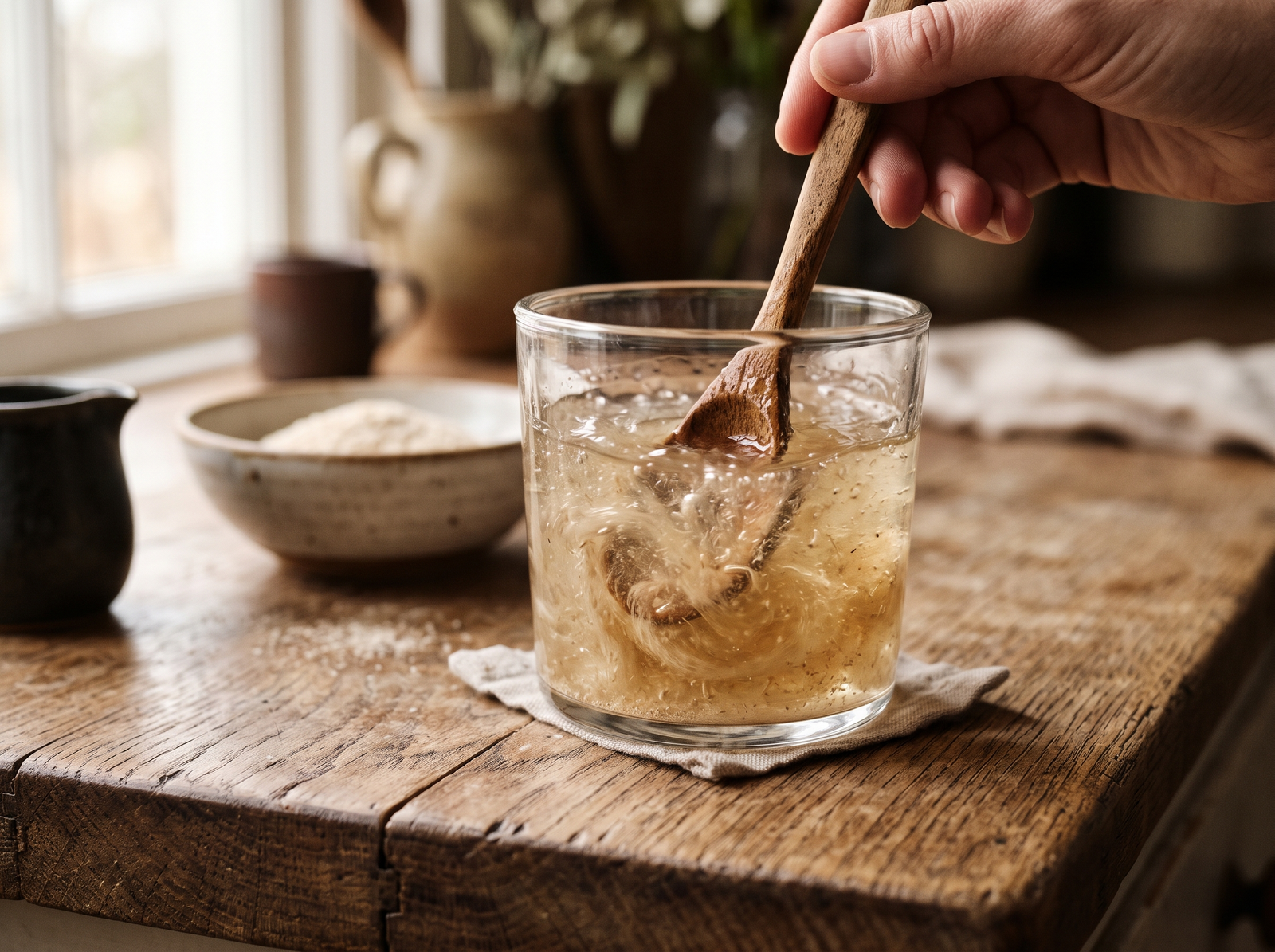
Psyllium husk — the ground seed coating of the Plantago ovata plant — is what food scientists call a viscous, gel-forming soluble fiber. Mixed with water in your gut, it swells into a thick, slow-moving gel. That gel does two mechanical things: it binds bile acids in the small intestine and carries them out in stool, and it physically slows how fast your stomach empties. The bile-acid loss matters more than it sounds — bile acids are made from cholesterol, so when your body excretes more of them, the liver responds by pulling more LDL cholesterol out of the bloodstream to manufacture replacements. It’s the same downstream pathway bile-acid-sequestrant drugs like cholestyramine use, just at a gentler, food-grade magnitude.
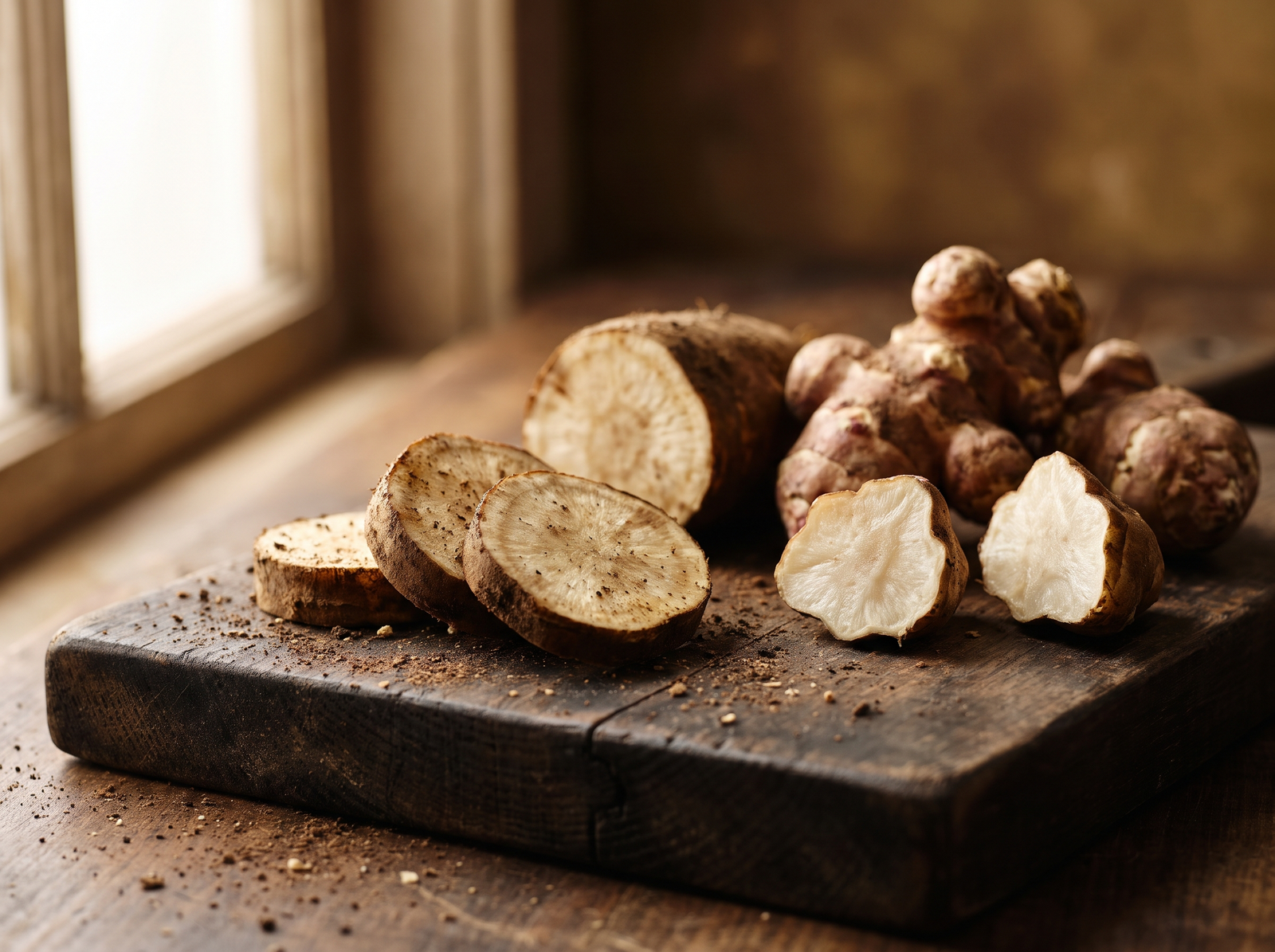
Inulin is a completely different kind of fiber. It’s a chain of fructose molecules, usually extracted from chicory root, held together by a bond human digestive enzymes can’t break. So instead of forming a gel in your small intestine, inulin passes through intact and arrives at your colon whole, where resident bacteria — especially Bifidobacterium — ferment it using enzymes humans don’t have. That fermentation is the entire point: it’s what makes inulin a “prebiotic,” feeding beneficial bacteria and producing short-chain fatty acids your colon cells use for fuel. It’s also, not coincidentally, exactly why inulin has a reputation for gas.
These aren’t two strengths of the same ingredient. One works mechanically, through a gel that mostly ignores your gut bacteria. The other works biologically, by feeding them. That difference decides everything downstream — which health claims each one can actually back up, how much of it you can comfortably take, and which one you should reach for depending on what’s actually bothering you.
Who Actually Needs This
Psyllium has the better claim on people managing borderline-high LDL cholesterol who want a non-drug adjunct, anyone who needs a reliable bulk-forming approach to chronic constipation or constipation-predominant IBS, and people trying to blunt post-meal blood sugar spikes or eat less without white-knuckling it — the gel’s slowed gastric emptying genuinely increases fullness.
Inulin is more relevant to people specifically trying to diversify or feed their gut microbiome — a goal that’s measurable (bacterial counts shift reliably) even though the downstream health benefits of that shift are still being worked out. It’s a poor fit for anyone already dealing with IBS, SIBO, or a known FODMAP sensitivity, since fermentable fibers like inulin are a textbook trigger for the bloating and cramping those conditions are defined by.
The Doses the Research Actually Used
Psyllium’s cholesterol data clusters around 10 to 15 grams of psyllium husk a day, split into two or three doses with meals, sustained for 6 to 12 weeks before it’s worth rechecking a lipid panel. A commonly cited meta-analysis pooling 28 randomized trials found an average LDL drop of roughly 0.28 mmol/L — about 10.8 mg/dL, or a 7 to 10 percent reduction from baseline — with no meaningful change to HDL. Pushing past about 20 grams a day hasn’t shown meaningfully larger benefit in the trials; it just costs you more gut capacity for water and bulk.
Inulin’s prebiotic effect has been studied at 5 to 15 grams a day, and a 12-gram daily dose of native chicory inulin is specifically what the European Food Safety Authority’s bowel-regularity claim is based on. The catch is tolerance, not efficacy: trials putting people straight onto 12 to 15 grams a day have reported more gas than placebo, while starting at 2 to 3 grams and working up over a few weeks is the standard way to blunt that. A single 10-gram dose is generally well tolerated in healthy adults — it’s the sustained daily habit at the higher end that tends to catch people off guard.
Psyllium Alone vs. Psyllium + Inulin: What Changes
Here’s a genuinely useful wrinkle: these two fibers don’t have to compete for a spot in your routine. A small imaging study in IBS patients found that adding psyllium to a 20-gram inulin dose cut the colonic gas inulin produced on its own back down toward placebo levels, and a follow-up trial found the same effect once psyllium’s gel reached the colon. The likely mechanism is that psyllium’s gel physically traps and slows the gas bacteria produce while fermenting the inulin. Both studies tested single doses rather than months of daily combined use, so treat this as a promising mechanism, not a settled protocol — but if inulin alone leaves you uncomfortably bloated, pairing a small dose of it with psyllium is a more evidence-backed fix than giving up on prebiotics entirely.
What to Look for in a Fiber Supplement
Whether you’re buying psyllium, inulin, or a blend of both, the label tells you most of what you need before you open the bottle:
- Which fiber, and how much of it, not just “fiber” on the front label. Multi-fiber blends and flavored fiber gummies often report one combined gram total without breaking out how much is actual psyllium husk versus inulin, maltodextrin, or other fillers — and if you want the cholesterol effect specifically, you need to know your psyllium grams, not your “fiber blend” grams.
- A per-dose amount that can realistically reach the research range. Capsule-form psyllium is convenient but dilute: at 500 mg a capsule, hitting a 10-to-15-gram daily dose takes 20 or more capsules, which almost nobody actually does. A powder you can measure by the teaspoon gets you there in a glass or two of water.
- A short, disclosed ingredient list. Plain husk or root powder with a simple capsule shell is the goal; added sugars, artificial sweeteners, or proprietary flavor blends dilute the actual fiber you’re paying for, especially in drink-mix formats.
- A titration note for fermentable fibers. Any inulin or FOS product worth buying tells you to start at 2 to 3 grams and build up over several weeks. A product that just says “take X grams daily” with no ramp-up guidance is more likely to leave your first week unpleasant.
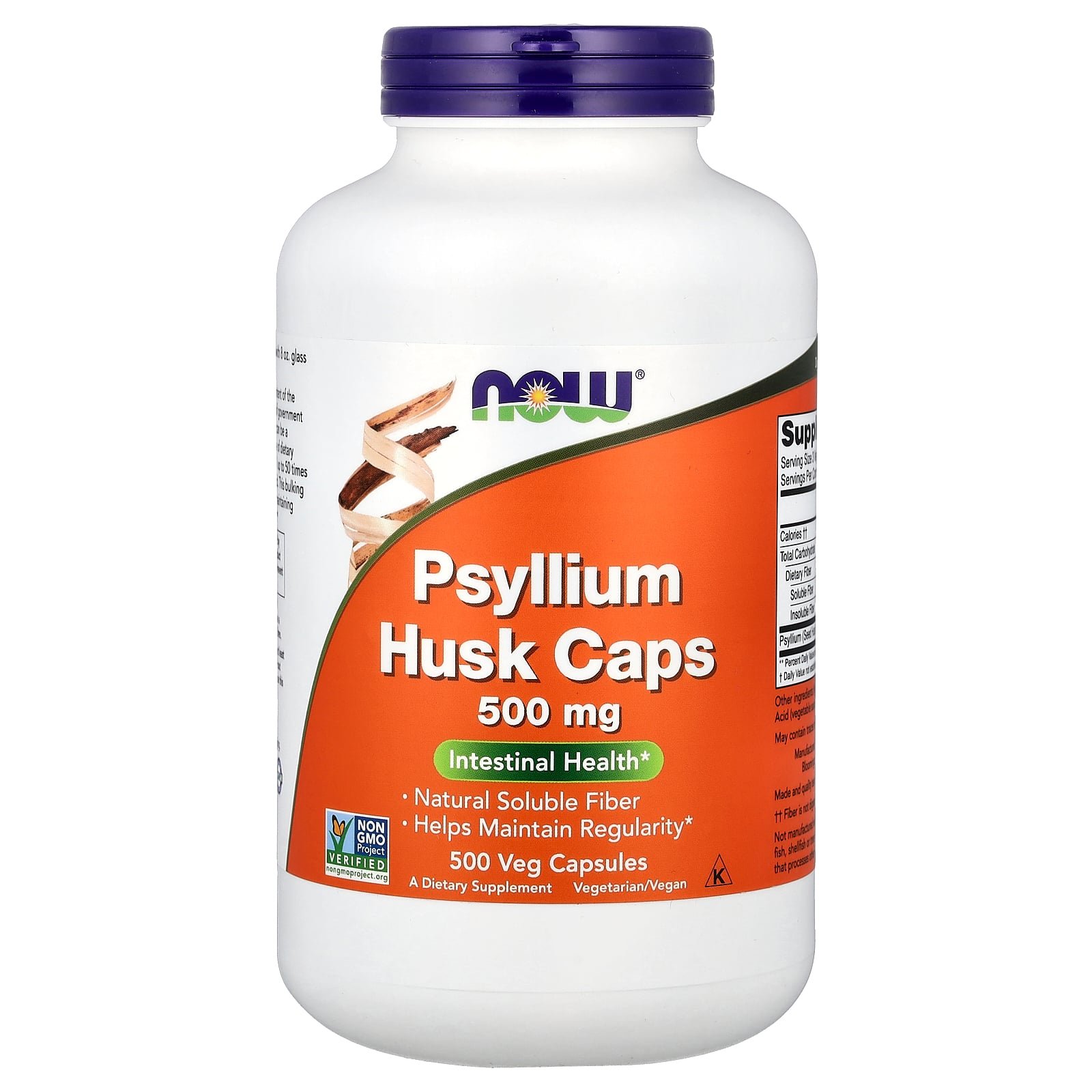
NOW Foods’ Psyllium Husk Caps clear the third bar cleanly — the only other ingredients are a hypromellose capsule shell and a trace of stearic acid, and the product is Non-GMO Project Verified and made in a GMP-audited facility. Where it runs into trouble is the second one: at the label’s suggested serving of three capsules, two to three times a day, you’re getting roughly 3 to 4.5 grams of psyllium husk a day — well under the 10-to-15-gram range the cholesterol research actually used.
A clean, minimally processed, well-certified psyllium product — but the label’s own suggested serving falls well short of the dose shown to meaningfully move cholesterol, so most buyers will need to take several times the “suggested use” to get the benefit they’re likely buying it for.
FAQs
Is psyllium or inulin the better fiber supplement?
Neither is universally “better” — they do different jobs. Psyllium forms a gel that bulks stool and helps lower LDL cholesterol; inulin ferments in your colon to feed gut bacteria. Pick based on the specific problem you’re trying to solve, not on which one sounds more advanced.
Why does inulin give me more gas than psyllium?
Because gas is the literal byproduct of what inulin is designed to do — get fermented by colon bacteria. Psyllium’s gel mostly passes through without being fermented, which is why it causes far less gas at an equivalent dose.
How much psyllium do I actually need to lower cholesterol?
Research showing meaningful LDL reductions used 10 to 15 grams of psyllium husk a day, split across two or three doses. Check your product’s actual grams per serving — many capsule products’ suggested use falls well short of that range, and you may need to take more than the label implies or switch to a measurable powder.
Can I take psyllium and inulin together?
Yes, and there’s early evidence it can help: a small IBS study found adding psyllium to an inulin dose reduced the gas inulin produced on its own. Start with small amounts of each and increase gradually, since you’re combining a bulking fiber with a fermentable one.
If borderline cholesterol or reliable regularity is the goal, psyllium — dosed to the gram range the research actually used, not just the bottle’s suggested serving — is worth raising with your doctor. If you’re aiming to support your gut microbiome and can tolerate some early gas, inulin is reasonable to add slowly. And if you already deal with IBS or a FODMAP-sensitive gut, lead with psyllium and go cautiously, if at all, with inulin.
As an Amazon Associate, The Health Verdict earns from qualifying purchases. This article is educational and is not medical advice — talk to your doctor before starting any new supplement, especially if you have a swallowing disorder, a history of bowel obstruction, or take medications that need to be spaced apart from fiber.