Potassium Iodide vs. Kelp: Why the "Natural" Iodine Source Is the One More Likely to Overdose You
Kelp sounds like the gentler, more natural way to get iodine — but testing has repeatedly found kelp supplements delivering two or three times the dose printed on the label.
Iodine has exactly one essential job in the body, and the thyroid does all of it. A transport protein called the sodium/iodide symporter, or NIS, pumps iodide out of the bloodstream and into thyroid follicular cells. From there, an enzyme called thyroid peroxidase oxidizes that iodide and attaches it to tyrosine residues on a large protein called thyroglobulin, building the two hormones that run your metabolic rate: thyroxine (T4, carrying four iodine atoms) and triiodothyronine (T3, carrying three). No iodine, no raw material, no hormone — which is why chronic iodine deficiency shows up as goiter and hypothyroidism rather than something more exotic.
Most people get their iodine from iodized salt, dairy, and seafood without ever thinking about it, which is also why supplementing it is a smaller, more niche category than something like vitamin D. When people do reach for an iodine supplement, it almost always comes in one of two forms: potassium iodide, a synthetic inorganic salt with a precisely defined iodine content, or kelp (sometimes labeled as sea vegetable, bladderwrack, or ocean-sourced iodine), a whole-food ingredient that happens to concentrate iodine from seawater.
Those sound like two flavors of the same thing, but they behave very differently once they’re in a capsule. Potassium iodide is a defined chemical compound — a 225 mcg label claim is a 225 mcg label claim. Kelp is a biological organism that absorbs however much iodine happens to be in the water it grew in, which varies by species, harvest region, season, and processing. That difference turns out to matter more for iodine than for almost any other mineral, because iodine has an unusually narrow window between "enough" and "too much."
Who Actually Needs This
True iodine deficiency is uncommon in the U.S. thanks to decades of salt iodization, but it clusters in predictable groups: people who’ve cut dairy and seafood, anyone avoiding iodized salt specifically for sodium reasons (kosher salt and most sea salt are not iodized), strict vegans, and people who are pregnant or breastfeeding, whose requirements jump from the adult 150 mcg a day to 220–250 mcg during pregnancy and 250–290 mcg while nursing, per the American Thyroid Association and NIH.
The flip side matters just as much: anyone with preexisting thyroid disease — nodules, Hashimoto’s, Graves’ — should treat iodine supplementation, kelp or potassium iodide alike, as a conversation with a doctor rather than a default purchase. Excess iodine can trigger thyroid dysfunction in people whose thyroid is already irregular, a swing in either direction known as the Jod-Basedow effect, and it’s one of the few supplement categories where the people most drawn to it by thyroid symptoms are sometimes the people who should be most cautious about it.

Dosing: What the Numbers Actually Mean
The adult RDA for iodine is 150 mcg a day, and the official tolerable upper limit (UL) set by NIH and the American Thyroid Association is 1,100 mcg a day. But the ATA goes further for this specific category: it advises against ingesting more than 500 mcg a day of iodine from supplements or kelp specifically, a narrower caution line set well below the official UL because this is a category where people routinely, accidentally exceed it.
That gap between labels and reality is exactly where kelp struggles. Because potassium iodide is a defined compound, a capsule labeled 225 mcg reliably delivers close to 225 mcg. Kelp doesn’t work that way: testing by ConsumerLab.com found that three of six popular kelp supplements it evaluated contained roughly double their labeled iodine content, actually delivering 530 to 960 mcg of iodine per daily serving — comfortably past the ATA’s 500 mcg caution line from a product whose label suggested a much smaller number. One of the tested products was also contaminated with arsenic. On top of the dosing variability, ConsumerLab also cites research suggesting iodine from kelp may be absorbed only about half as well as iodine from potassium iodide — so even an accurately labeled kelp product can still deliver a less predictable amount of usable iodine than the number on the bottle implies.
Potassium Iodide vs. Kelp: What Changes
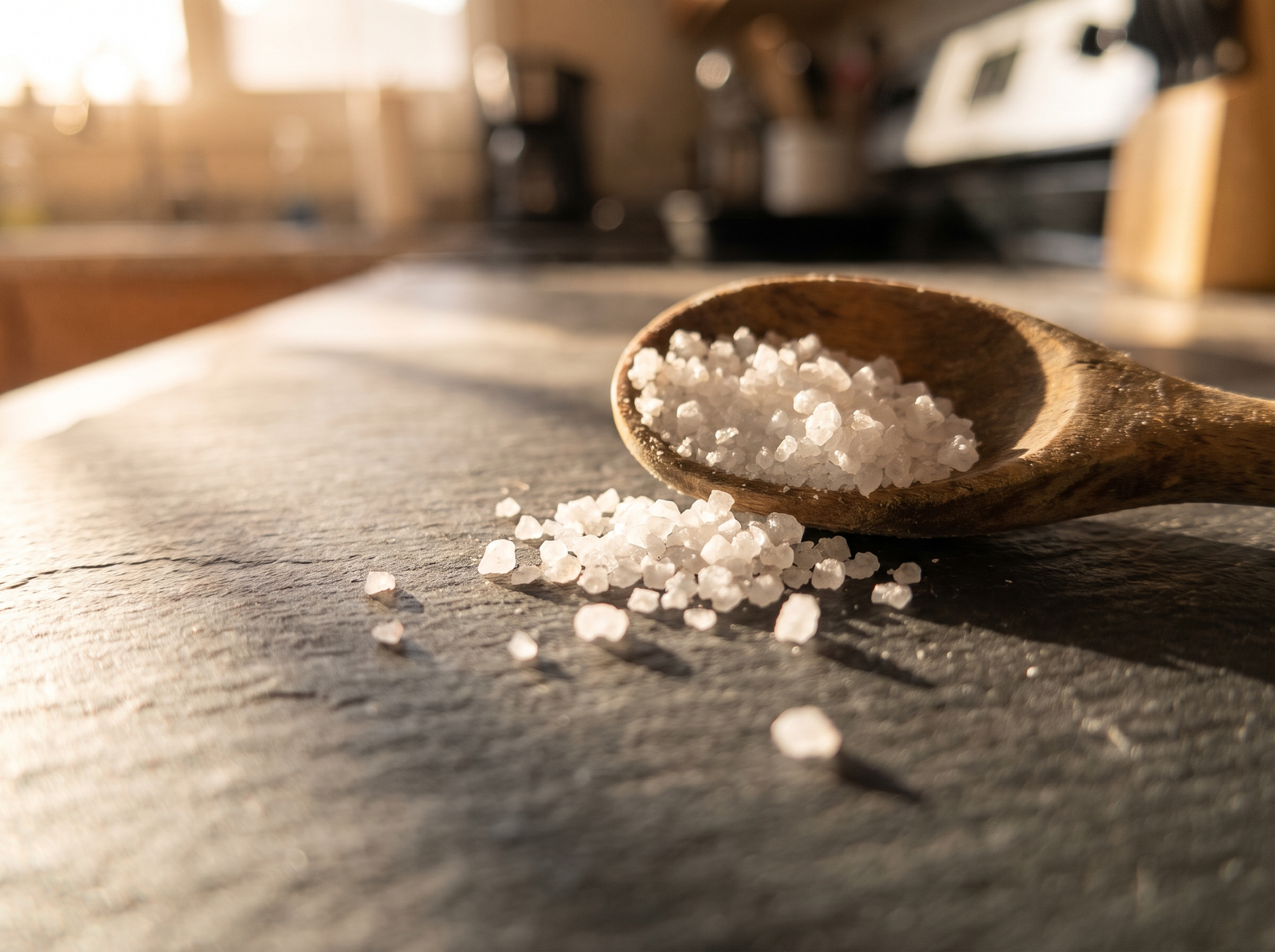
Both forms ultimately deliver iodide that the same NIS transporter pumps into the same thyroid cells — switching from one to the other doesn’t change the biology. What changes is predictability. Potassium iodide is a single, defined inorganic salt, so what’s printed on the label is a reasonably reliable match for what’s in the capsule. Kelp is a harvested whole-food ingredient, and its iodine content is only one of several things that vary batch to batch; the same seawater-concentrating property that makes kelp iodine-rich is also what lets it pick up heavy metals like arsenic from its environment. Someone trying to stay comfortably under the ATA’s 500 mcg caution line can do that reliably on a labeled potassium iodide dose. Doing the same math on an inconsistently tested kelp product is closer to guessing.
What to Look For in an Iodine Product
A few concrete checks, ordered by how often products in this category fail them:
- The exact form is named on the label. "Potassium iodide" is a defined, verifiable compound. "Kelp," "sea vegetable blend," or "ocean-sourced iodine" with no independently verified mcg testing behind it is the version most likely to run well above — or below — its stated dose.
- The dose sits near the RDA, not deep into megadose territory. A single capsule anywhere from 150 to 225 mcg covers the adult RDA with room to spare. Anything that pushes your total daily intake, across every source, past the American Thyroid Association’s 500 mcg caution line deserves a second look before you buy it.
- The manufacturer tests for contaminants, not just potency. This matters more here than for most minerals, because the two realistic sourcing paths carry different risks — manufacturing byproducts on the synthetic side, heavy metals like arsenic on the seaweed side. A facility that’s NSF-GMP registered and explicitly tests raw materials for heavy metals is operating under real oversight; a label that only says "natural" or "pure" is not.
- No unverified certification claims riding on brand reputation alone. A company-wide quality statement is not the same as a tested, verified claim for the specific bottle in your hand. Look for brands that name what they actually test for — identity, potency, heavy metals, microbial contaminants — rather than vague marketing language with nothing checkable behind it.
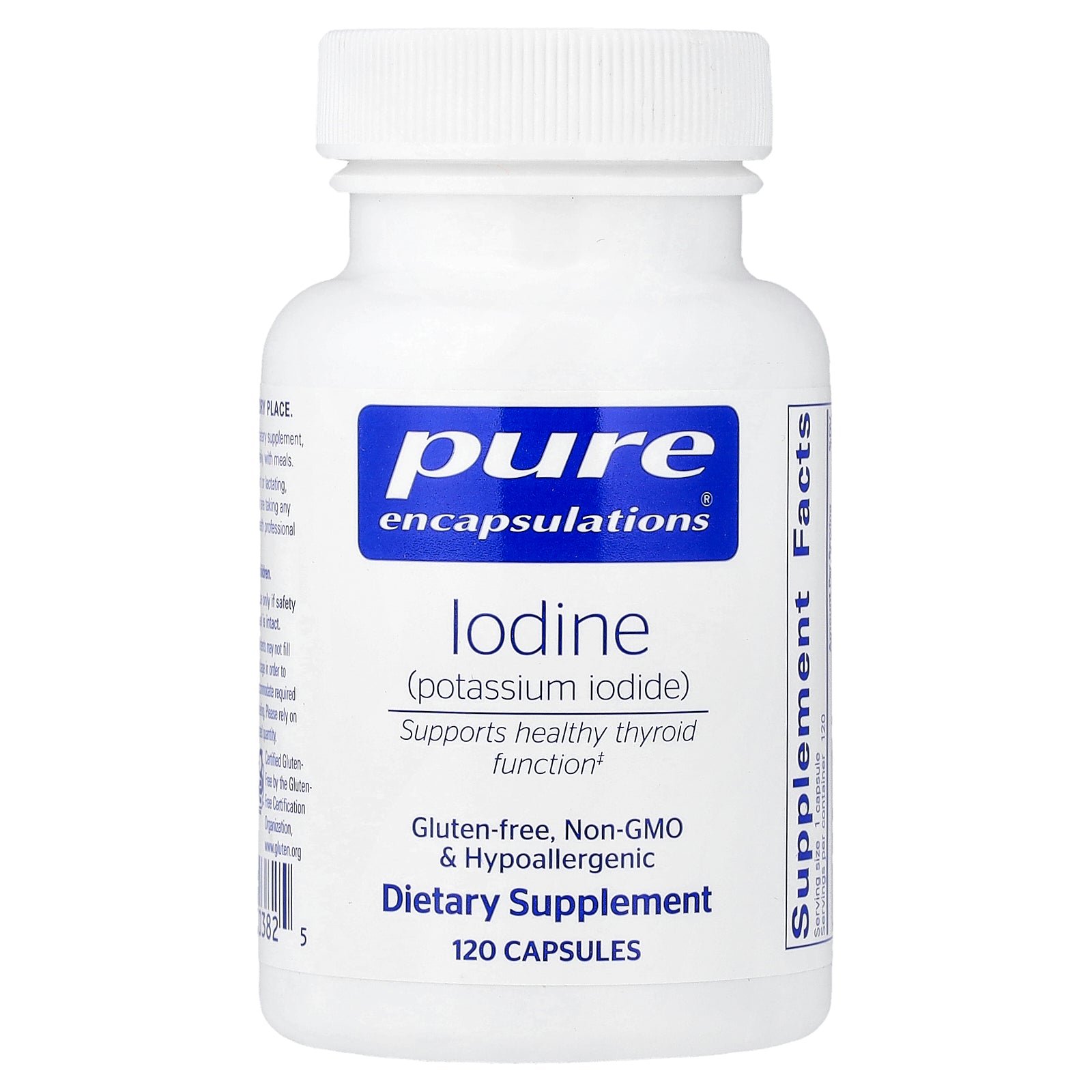
Pure Encapsulations’ Iodine clears these checks cleanly: it names its exact compound (potassium iodide) rather than a vague "sea" blend, doses at 225 mcg per capsule — comfortably inside the RDA-to-caution range rather than a megadose — and comes from an NSF-GMP registered facility that states it tests raw materials for heavy metals and more than thirty solvent residues alongside potency, without leaning on any inflated sport- or athlete-specific certification it hasn’t earned.
A plainly labeled, precisely dosed potassium iodide capsule from a facility with real, stated contaminant testing — the predictable choice in a category where the "natural" alternative is the one more likely to overshoot its own label.
FAQs
Is kelp a good source of iodine?
It can be, but the amount it actually delivers is far less predictable than a synthetic iodine salt. Testing has repeatedly found kelp supplements containing roughly double their labeled iodine content, occasionally alongside heavy-metal contamination. If iodine is the actual goal, potassium iodide removes most of that guesswork; if you want kelp for other reasons, look for one independently tested for both iodine content and contaminants.
Can too much iodine supplementation cause thyroid problems?
Yes. Iodine is one of the few nutrients where more isn’t simply better past a certain point — excess intake can trigger thyroid dysfunction in susceptible people, a swing called the Jod-Basedow effect, most often in those with preexisting thyroid disease, nodules, or autoimmune thyroiditis. The American Thyroid Association specifically advises against exceeding 500 mcg a day from iodine or kelp supplements for this reason.
Do I still need an iodine supplement if I use iodized salt?
Probably not. A quarter teaspoon of iodized salt supplies roughly 71 mcg of iodine, and most people eating a typical American diet with salt, dairy, and seafood already meet the 150 mcg adult RDA without supplementing. An iodine supplement makes more sense for someone who’s intentionally cut salt for blood pressure reasons, avoids dairy and seafood, or is pregnant or breastfeeding.
Is potassium iodide safe to take during pregnancy?
That’s a question for your OB specifically, but general guidance tends to favor potassium iodide over kelp during pregnancy and breastfeeding, precisely because of the dosing-predictability issue above — getting too little iodine is a real risk in pregnancy, but so is a kelp product that quietly delivers two or three times its label claim.
If you’ve cut dairy or seafood, avoid iodized salt, eat a strictly plant-based diet, or are pregnant or breastfeeding, a precisely dosed potassium iodide supplement is worth considering over a kelp product. Most people eating a typical American diet already get enough iodine from food and don’t need to add any — this is a check-your-diet-first category, not a default-add one.
As an Amazon Associate, The Health Verdict earns from qualifying purchases. This article is educational and is not medical advice — talk to your doctor before starting any new supplement, especially if you have a thyroid condition or take thyroid medication.