Why 10mg of Melatonin Might Work Worse Than 0.3mg
Melatonin is one of the best-selling sleep supplements in the country, and most of the bottles on that shelf are dosed ten to twenty times higher than anything the actual sleep-onset research supports.
Melatonin isn’t a sedative the way a sleeping pill is. Your pineal gland releases it in response to darkness as a timing signal — it tells the rest of your body “it’s night,” shifting your circadian clock rather than knocking you out directly. Peak nighttime blood levels in a healthy adult are roughly 0.1–0.3 mg equivalent. Melatonin receptors (MT1 and MT2) bind the hormone efficiently at that concentration, and binding plateaus quickly after — more molecules circulating doesn’t mean proportionally more signal getting through.
Most melatonin gummies and tablets contain 3–10 mg per serving, some as high as 20 mg — ten to sixty times what your body produces on a normal night. Because receptors are already saturated at a fraction of that dose, the extra melatonin mostly just circulates longer, showing up in your bloodstream well into daylight hours. That’s the likely mechanism behind the groggy, hungover feeling some people get the morning after a high-dose gummy.
This isn’t a fringe opinion. A frequently cited MIT trial led by Richard Wurtman gave older adults either a 0.3 mg dose — close to a natural nighttime level — or a 3 mg dose, roughly ten times higher. The low dose helped people who tended to wake overnight stay asleep; the higher dose was less effective for that problem and raised daytime melatonin enough to cause a hangover-like effect in some subjects. Wurtman’s own summary was blunt: “less is more.”
Who actually needs a melatonin supplement
Melatonin is most useful for circadian-timing problems, not insomnia in general. Jet lag, overnight shift work, and delayed sleep phase (a body clock running hours behind a normal schedule) have the strongest evidence behind melatonin specifically, because the goal is nudging your internal clock, not sedating you.
Older adults are a partial exception worth naming honestly. Melatonin production declines with age, and a 2022 Harvard-affiliated trial in older adults with sleep complaints found higher doses increased total sleep duration more than lower ones did — the opposite pattern from Wurtman’s study. That’s less a contradiction than a reminder that individual need varies; it’s worth discussing your specific dose with a doctor rather than assuming one rule fits everyone.

How much melatonin the research actually supports
For sleep-onset and circadian-shifting purposes — the uses with the best evidence — most controlled trials showing a meaningful effect use doses in the 0.3–1 mg range, close to what a healthy body produces overnight. The mechanism is a timing signal to MT1/MT2 receptors, not a dose-dependent sedative effect, so taking more doesn’t reliably mean falling asleep faster once you’re past that low range.
Timing matters at least as much as dose. For jet lag or a delayed sleep phase, melatonin is generally taken 1–2 hours before your target bedtime, at a consistent time every night — that consistency does a lot of the work. Doses well above 1 mg haven’t shown proportionally greater benefit in most healthy-adult trials, and they do raise how much melatonin is still circulating when you wake up.

Low-dose vs. high-dose melatonin: what changes
A low dose (0.3–1 mg), timed consistently before bed, matches the receptor biology the research is built around and leaves less melatonin circulating by morning. A high dose (3–10 mg or more) — what most OTC gummies and tablets actually contain — doesn’t reliably outperform the low dose for healthy adults trying to fall asleep faster, and raises the odds of next-day grogginess. If you’ve taken a 5 or 10 mg gummy nightly for months and still don’t feel like it’s “working,” that may be evidence you’ve never actually tried the dose the research supports.
What to look for in a melatonin product
A few concrete checks, ordered by how often we see products fail them:
- The label actually offers a low-dose option. If a brand’s only melatonin product is 5 mg or 10 mg, you can’t get to the research-backed range by guessing at a smaller piece of a gummy — look for a brand that sells a genuine 0.3–1 mg serving.
- A batch-level Certificate of Analysis is available on request. A 2023 JAMA study tested 25 melatonin gummies and found only 3 fell within 10% of their labeled dose — actual content ranged from 74% to 347% of the label claim. Without a CoA, you’re trusting a label the published data says is frequently wrong.
- Manufacturing happens in an NSF-audited, cGMP-compliant facility. This is a check on the process, not just the finished bottle, and it’s the kind of audit that catches contamination and dosing drift before a batch ships.
- No proprietary blend hiding the actual melatonin amount. Some “sleep support” combo products bury melatonin inside a blend with valerian, chamomile, or L-theanine and only disclose a combined milligram total — making it impossible to know how much melatonin you’re actually taking.
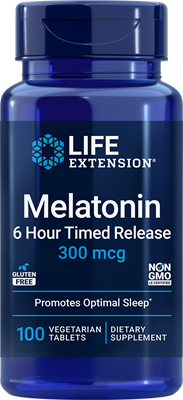
Life Extension’s 6 Hour Timed Release Melatonin passes on all four counts: dosed at 300 mcg (0.3 mg), almost exactly the dose Wurtman’s trial used, manufactured in an NSF-audited cGMP facility, with certificates of analysis available on request — transparency the JAMA gummy data suggests is the exception in this category, not the rule.
A correctly-dosed melatonin option that sits right in the range sleep-onset research actually supports, from a brand manufactured in an NSF-audited cGMP facility with batch certificates of analysis available on request.
FAQs
Is 0.3 mg really enough melatonin to do anything?
Yes, for the purpose melatonin is actually good at — signaling your circadian clock that it’s night. That dose is close to what a healthy adult body produces on its own overnight, which is exactly why the research trials using it have found real effects on sleep onset and overnight waking. More isn’t the same as more effective here, because the receptors it binds saturate quickly.
Why do so many gummies contain 5 mg or more if lower doses work as well or better?
Melatonin is regulated as a supplement, not a drug, so labels aren’t required to match what research supports. A bigger number markets easily as “stronger,” and a 2023 JAMA analysis found many gummies didn’t even reliably contain the amount printed on the label.
Can I just cut a 5 mg tablet or gummy into smaller pieces to get a lower dose?
Not reliably. Melatonin isn’t always distributed evenly through a gummy or tablet, and a timed-release tablet is designed to release over hours, which cutting can disrupt. It’s more reliable to buy a product formulated at the dose you actually want.
Is melatonin safe to take every night long-term?
Short-term trials generally show it’s well tolerated, but there’s less data on nightly use for years at a time, especially at higher doses. Talk to your doctor before making it permanent, and definitely before combining it with antidepressants, blood thinners, or diabetes medication, since melatonin can interact with all three.
If you’ve been taking a 5 or 10 mg melatonin product nightly and still wake up groggy, or still don’t feel like it’s helping, it’s worth trying a dose closer to what your body actually makes before concluding melatonin isn’t for you.
As an Amazon Associate, The Health Verdict earns from qualifying purchases. This article is educational and is not medical advice — talk to your doctor before starting any new supplement, especially if you take antidepressants, blood thinners, or diabetes medication, or if you are pregnant or nursing.