Magnesium Glycinate vs. L-Threonate: Which One Should You Actually Take?
“Magnesium” isn’t one supplement — it’s a whole family of compounds that behave differently once you swallow them, and the two forms readers ask us about most, glycinate and L-threonate, are not interchangeable no matter what the comment section says.
Magnesium is a cofactor in more than 300 enzymatic reactions — muscle contraction and relaxation, nerve signaling, blood sugar regulation, and the synthesis of GABA, the neurotransmitter most responsible for winding your nervous system down at night. It’s also one of the most under-consumed minerals in the modern diet, thanks to depleted soil and processed food crowding out its best dietary sources (leafy greens, nuts). Depending on the survey, somewhere close to half of U.S. adults fall short of the RDA from diet alone.
The form matters because “magnesium” on a label tells you almost nothing by itself — it’s always sold bonded to something else, and that something else determines how well your body absorbs it and, in a couple of specific cases, where it goes once absorbed. The cheapest form on drugstore shelves is magnesium oxide, and it earns magnesium’s reputation as a stomach-upsetting supplement almost single-handedly: its bioavailability is roughly 4%, so most of the dose sits unabsorbed in the intestine, pulling in water and acting as a laxative rather than raising your magnesium levels.
Glycinate and L-threonate are both chelated forms that sidestep that problem, but they were built to solve different ones. Glycinate binds magnesium to glycine, an amino acid with its own mild calming effect, and it’s one of the best-absorbed, best-tolerated general-purpose forms available — the default choice for correcting a deficiency without the GI fallout. L-threonate binds magnesium to threonic acid, a vitamin C metabolite, and was specifically engineered and studied for its ability to cross the blood-brain barrier and raise magnesium levels in brain tissue — a property the other chelated forms haven’t demonstrated to the same degree.
Who actually needs which form
If your main complaints are trouble winding down at night, muscle cramps or tension, or a supplement that’s upset your stomach before, glycinate is the more direct match — well absorbed without the laxative effect, and since it isn’t priced around a specialty use case, every dollar buys more elemental magnesium than L-threonate does.
If your goal is specifically cognitive — memory, focus, brain fog, or supporting cognition as you age — L-threonate is the form actually built and studied for that. A 2025 randomized, double-blind, placebo-controlled trial published in Frontiers in Nutrition measured its effects on cognitive performance and sleep quality directly, not just self-reported relaxation. It’s also worth trying for people who’ve already used glycinate for sleep and want to test whether the brain-targeted angle adds anything more.

How much magnesium do you actually need
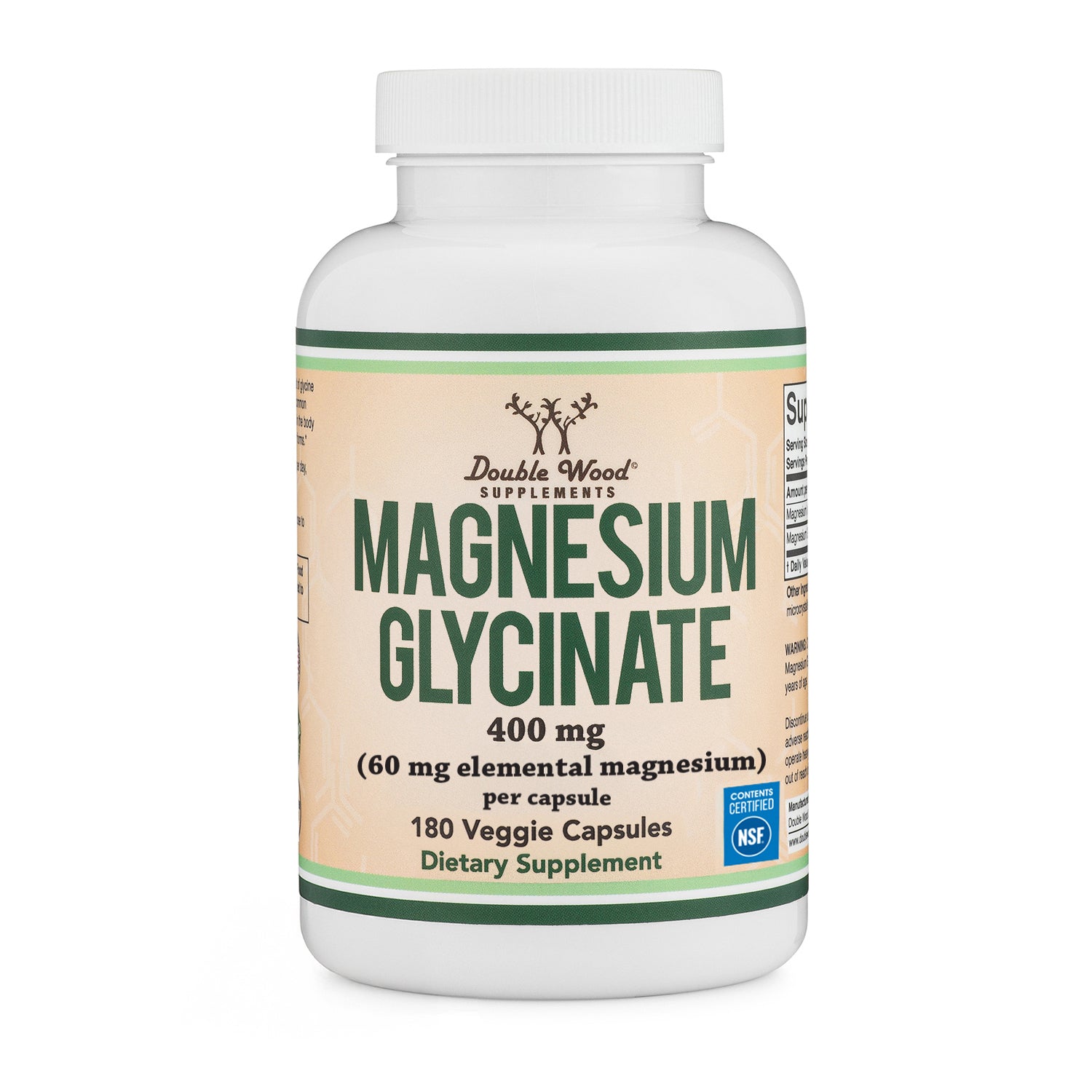
The RDA is roughly 400–420mg per day for adult men and 310–320mg for adult women — total elemental magnesium from all sources, diet included, not the raw number on a supplement label. That’s the first place labels get confusing: many list compound weight (for example, “magnesium bisglycinate 400mg”) rather than the elemental magnesium your body actually uses, and those two numbers can differ three to six times depending on the chelate. A 400mg dose of magnesium bisglycinate typically works out to only about 60mg of elemental magnesium, since glycine makes up most of that weight.
L-threonate runs into the same math from a different angle. A typical 2,000mg serving yields roughly 144mg of elemental magnesium — the exact dose used in the published cognition and sleep research, since researchers dosed to hit that elemental target. When comparing two magnesium products or working out cost per day, always convert to elemental milligrams first; comparing raw compound weight across different chelates is comparing two different things.

Glycinate vs. L-threonate: what changes
Both forms raise blood magnesium levels, and both are considerably gentler on the GI tract than oxide or citrate at comparable doses. The real divergence is in where the evidence points: glycinate’s research base is broad — general repletion, sleep quality, muscle relaxation, cramping — while L-threonate’s is narrower but more specific, built around raising brain magnesium and measuring cognitive outcomes directly. Neither form is “better” in the abstract; they answer different questions, and picking by price-per-elemental-milligram rather than whichever one ranks first in search is usually the right call, unless the cognitive angle specifically applies to you.
What to look for in a magnesium product
A few concrete checks, in order of how often we see products fail them:
- Elemental magnesium is disclosed, not just compound weight. If a label only states the chelate weight and leaves you to guess the elemental dose, that’s a transparency red flag, not just an inconvenience.
- The chelate is the primary ingredient, not magnesium oxide padded in behind it. Some “glycinate” products blend in cheaper oxide to hit a bigger headline number — check the supplement facts panel, not just the front label.
- The brand publishes independent third-party testing (NSF, USP, Informed Sport) rather than an in-house “quality tested” claim with nothing to verify it against.
- No proprietary “calming blend” hides the actual magnesium dose behind a handful of other ingredients you can’t individually verify or dose against research.
This is exactly what Double Wood’s Magnesium Glycinate gets right: the label states the 60mg elemental figure directly instead of burying it behind the 400mg compound weight, bisglycinate is the sole active ingredient with nothing else blended in, and the product carries NSF-certified third-party testing against a batch-level Certificate of Analysis you can actually look up.
Discloses its elemental magnesium content directly, uses bisglycinate as the sole active ingredient, and carries NSF-certified third-party testing — the more versatile, better-value pick for sleep, muscle tension, and general repletion.
FAQs
Can I take magnesium glycinate and L-threonate together?
Yes, though most people don’t need to. If glycinate already covers your elemental magnesium needs and you specifically want L-threonate’s cognitive research too, some people add a smaller dose on top rather than switching — just total the elemental magnesium across both so you’re not stacking past a level your doctor is comfortable with.
Will magnesium glycinate cause the same stomach upset as magnesium oxide?
Generally, no. Oxide’s laxative effect comes mostly from unabsorbed magnesium pulling water into the intestines, and glycinate’s much higher absorption rate leaves far less undigested. Some people still notice mild loosening at high doses, but it’s a fraction of what an equivalent elemental dose of oxide causes.
How long before I notice better sleep or less muscle tension?
Many people report a subjective difference within a few days to two weeks of consistent nightly dosing. If you’re correcting an actual deficiency rather than topping off adequate levels, it can take four to six weeks for blood magnesium to fully stabilize — consistency matters more than which day you start.
Is it safe to take magnesium glycinate every night long-term?
For most healthy adults, yes — magnesium has a wide safety margin and healthy kidneys clear the excess efficiently. The exception is anyone with reduced kidney function, where magnesium can build up to unsafe levels; that’s specifically who should talk to a doctor before starting daily supplementation.
If your main complaint is trouble sleeping, muscle cramps, or general tension and you’re not specifically chasing the cognitive research, magnesium glycinate is the more direct, better-value place to start — save L-threonate for when the brain-specific angle is actually what you’re after.
As an Amazon Associate, The Health Verdict earns from qualifying purchases. This article is educational and is not medical advice — talk to your doctor before starting any new supplement, especially if you have reduced kidney function or take medications that can interact with magnesium, such as certain antibiotics or bisphosphonates.