L-Carnitine vs. Acetyl-L-Carnitine: One Feeds Your Muscles, One Feeds Your Nerves
Walk down the supplement aisle and “carnitine” looks like one ingredient with a few different labels on it. It isn’t — the plain form and the acetylated form travel to different places in your body, and buying the wrong one for your goal is close to buying nothing at all.
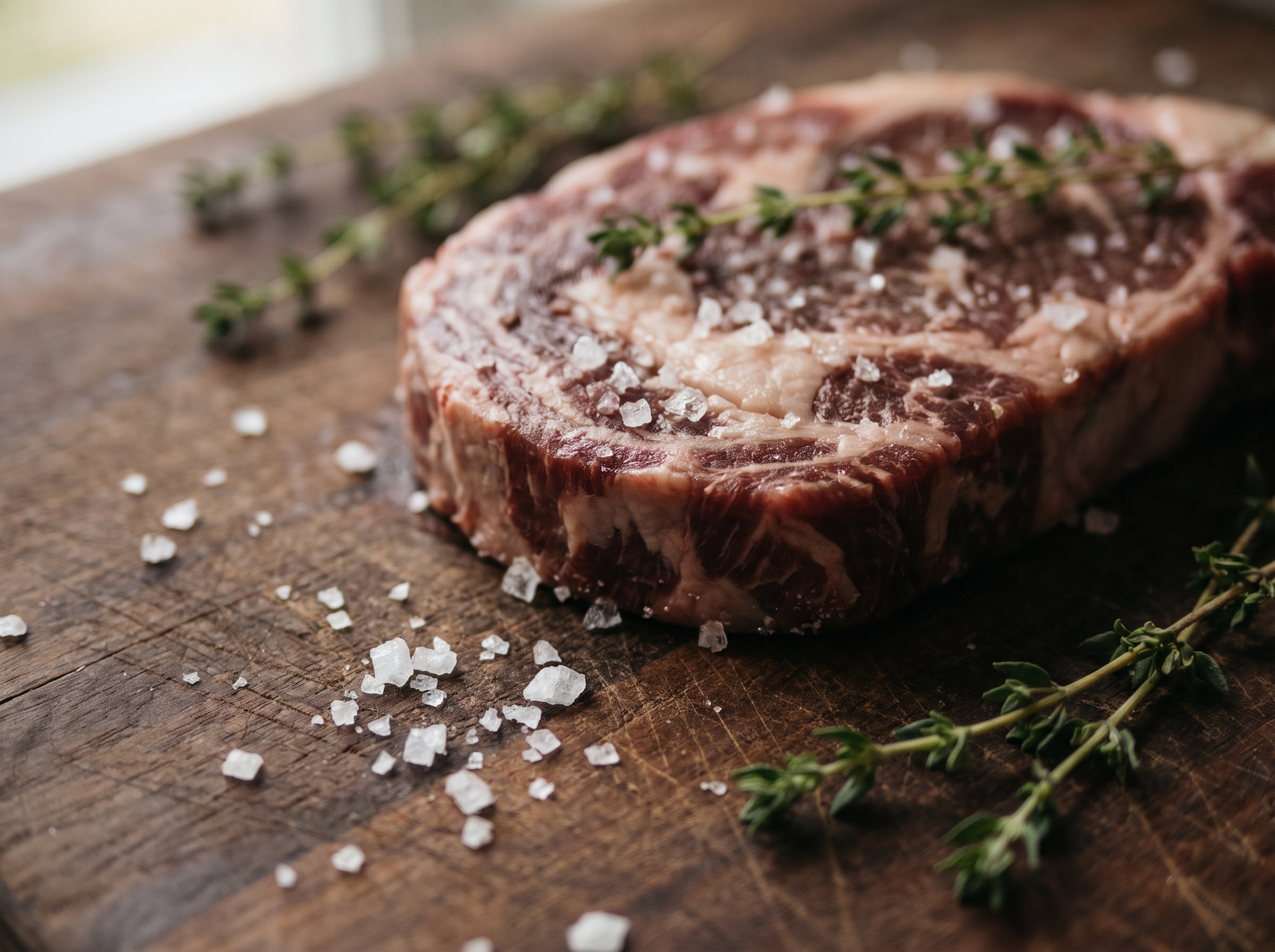
Plain L-carnitine’s job is narrow and mechanical: it shuttles long-chain fatty acids across the mitochondrial membrane so your cells can burn them for energy. No carnitine, no fat-burning in that pathway — it’s the truck, not the fuel. Your liver and kidneys synthesize some of it from the amino acids lysine and methionine, but for most people the bigger share comes from diet, and red meat is by far the richest source. That single fact drives most of who actually benefits from supplementing it.
Acetyl-L-carnitine (ALCAR) is the same backbone molecule with one acetyl group attached. That small addition changes where it goes: ALCAR crosses the blood-brain barrier far more readily than plain carnitine, and once inside neurons it feeds into acetylcholine production and mitochondrial energy metabolism in nerve tissue. That’s why you’ll find it marketed for cognitive support and nerve-related symptoms rather than fat loss or muscle endurance — it’s chasing a different target entirely.
This is the part most product pages skip: these two forms are not a cheaper option and a premium upgrade of the same thing. A “fat burner” stack loaded with plain L-carnitine isn’t doing anything for nerve health, and a nerve-support capsule of ALCAR isn’t going to move the needle on your deadlift. Picking between them should come down to which problem you actually have.
Who Actually Needs This
Plain L-carnitine is worth a look for people doing structured endurance or resistance training over months, not days — and, importantly for the dosing section below, only when it’s taken the way the research actually tested it. It’s also more relevant for long-term vegans and vegetarians, whose muscle carnitine stores run measurably lower on biopsy studies than omnivores, since synthesis alone covers only part of the body’s needs and diet normally fills the rest. Older adults with age-related declines in mitochondrial fatty-acid transport are the other group sometimes studied, though the evidence there is thinner than the marketing suggests.
Acetyl-L-carnitine sits in a different lane: people managing diabetic peripheral neuropathy or chemotherapy-related nerve discomfort, as a supplement to — never a replacement for — the treatment their doctor has them on, and adults exploring general mental-clarity support. We’ll be direct about the evidence quality for both of those uses in the dosing section, because it’s weaker and more mixed than most ALCAR product pages let on.

The Doses the Research Actually Used
For plain L-carnitine, the Australian Institute of Sport’s supplement framework — one of the more skeptical, methodical reviewers in sports nutrition — puts the researched range at 1.4 to 3 grams of L-carnitine (2 to 4 grams if you’re using the L-tartrate form), split into two doses a day, sustained for 12 weeks or longer. The detail almost every bottle leaves off the label: those studies paired each dose with a carbohydrate-containing meal, roughly 80 grams of carbs, to spike insulin and help drive the carnitine into muscle tissue. Without that, oral L-carnitine has shown little to no increase in actual muscle carnitine content in biopsy studies — a capsule swallowed on an empty stomach before a workout is close to the one protocol the research didn’t support.
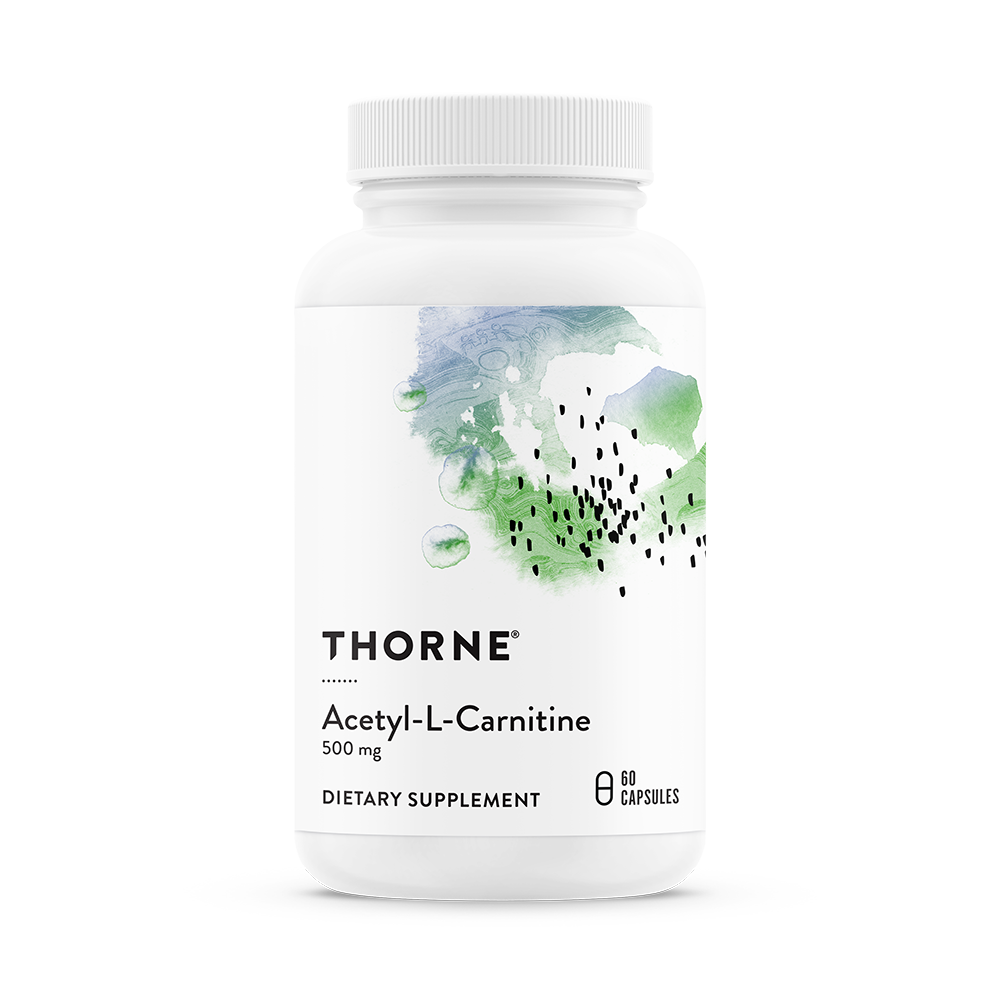
Acetyl-L-carnitine’s dosing picture comes mostly from diabetic peripheral neuropathy trials, summarized in a 2019 Cochrane review of four studies and roughly 900 participants. Doses ranged from 1,500 to 3,000 mg per day. Pooled across trials using 1,500 mg/day or less, there was essentially no difference from placebo. Trials using more than 1,500 mg/day did show a statistically significant reduction in pain — but the review’s own authors flagged that higher-dose result as less reliable and said it “should be viewed with caution,” partly because two of the four trials were funded by an ALC manufacturer. Thorne’s label suggests one capsule two to three times daily, meaning 500 to 1,500 mg per day — a range that sits right at, or below, the dose that failed to separate from placebo in the pooled analysis. Overall certainty of evidence across the review: very low to low.
L-Carnitine Alone vs. L-Carnitine With Carbohydrate: What Changes
This is the clearest illustration of how much context matters for this ingredient. Take an oral L-carnitine capsule by itself and muscle biopsy studies have generally found it barely moves the needle on actual muscle carnitine stores — the body just doesn’t pull much of it out of the blood and into the tissue without a reason to. Pair that same dose with a carbohydrate-heavy meal, sustained twice a day for 12 or more weeks, and the insulin spike appears to open the door: studies using that exact protocol have shown real increases in muscle carnitine content, along with modest downstream effects like reduced markers of exercise-induced muscle damage and improved strength (though not muscle mass) over several weeks of resistance training. The ingredient hasn’t changed between those two scenarios. The delivery context has, and it’s the difference between a supplement doing something measurable and one that mostly passes through.
What to Look for in a Carnitine Product
Whichever form you need, the label tells you most of what matters before you ever open the bottle:
- One disclosed form, not a blend. A lot of “carnitine” products combine L-carnitine, L-carnitine L-tartrate, and acetyl-L-carnitine under one proprietary blend total. Since these forms aren’t interchangeable, a label that won’t tell you which one dominates the capsule is a label hiding the one fact you need most.
- A per-dose amount that matches the research range, not a marketing number. The studies that showed any effect used 1.4 to 3 grams a day of L-carnitine or 1.5 to 3 grams a day of ALCAR, split across the day. A lot of commercial capsules land well under that on a single-serving basis.
- Independent verification. An NSF/ANSI 173 listing (NSF’s standard dietary-supplement certification, distinct from the stricter “NSF Certified for Sport” tier) or an Informed Sport mark means a third party has checked that what’s on the label matches what’s in the capsule — something that varies more than most shoppers assume across uncertified carnitine brands.
- No hidden stimulant stack. Plenty of “fat burner” carnitine blends quietly add caffeine, synephrine, or yohimbine. That makes it impossible to tell whether the carnitine is doing anything on its own, and it adds real cardiovascular risk for anyone with a heart condition or blood pressure issue.
Thorne’s Acetyl-L-Carnitine clears the first three bars cleanly: it’s a single listed ingredient at 500 mg per capsule with no blend to decode, it’s NSF/ANSI 173-listed, and at the top of its own suggested range (three capsules, 1,500 mg/day) it reaches the low end of doses studied for nerve-related symptoms. It isn’t NSF Certified for Sport specifically, and — as the dosing section above lays out — its typical suggested range sits at the edge of, or below, where the clinical evidence actually separates from placebo.
A clean, single-ingredient, NSF/ANSI 173-listed capsule dosed within shouting distance of the research range — but the best available review of what this ingredient is actually sold to do calls the evidence “very uncertain,” and the label’s typical 1 to 3 capsule range undershoots the dose that separated from placebo in the trials.
FAQs
Is acetyl-L-carnitine just a better version of L-carnitine?
No — they’re not ranked versions of each other, they’re built for different jobs. Plain L-carnitine moves fatty acids into muscle mitochondria for energy; the acetyl group on ALCAR lets it cross into brain and nerve tissue instead. Taking the “stronger” one for a muscle-energy goal, or vice versa, won’t give you the effect you’re after.
Does L-carnitine actually help you lose fat or burn more fat during exercise?
The evidence is weak on this specific claim. The Australian Institute of Sport’s review found a lack of evidence that carnitine meaningfully enhances fat loss, and most of the studies showing any metabolic effect required a specific carbohydrate co-ingestion protocol most “fat burner” products don’t tell you about, let alone follow.
How much acetyl-L-carnitine do I need for nerve-related symptoms?
Trials studying diabetic peripheral neuropathy used 1,500 to 3,000 mg per day, and the pooled effect only separated meaningfully from placebo above 1,500 mg/day — with the review’s authors cautioning that higher-dose result is itself less certain. If you have a diagnosed nerve condition, this is a conversation for your doctor, not a label you self-dose from.
Does carnitine interact with any medications?
Possibly. There’s a theoretical interaction with blood thinners like warfarin — based mainly on data for a related anticoagulant rather than warfarin directly — where carnitine might increase anticoagulant effect. If you’re on a blood thinner or any medication where small changes matter, check with your doctor or pharmacist before adding either form.
If you’re training consistently and eating mostly plant-based, plain L-carnitine is worth discussing with a doctor or dietitian — and worth taking the way the studies did, with carbohydrate, not on an empty stomach. If you’re dealing with diagnosed nerve symptoms, acetyl-L-carnitine is reasonable to raise with the clinician already treating that condition, not a stand-in for their plan. For most everyone else, the honest read on both forms is modest evidence for a specific, narrow use case rather than a general-purpose upgrade.
As an Amazon Associate, The Health Verdict earns from qualifying purchases. This article is educational and is not medical advice — talk to your doctor before starting any new supplement, especially if you take a blood thinner or have a diagnosed nerve condition.