Iron Bisglycinate vs. Ferrous Sulfate: The Absorption Catch Nobody Mentions
Chelated iron is sold as the fix for the nausea and constipation that make people quit ferrous sulfate mid-bottle — but the study that actually tested how it’s absorbed found something the marketing copy leaves out.
Ferrous sulfate is the iron form in nearly every generic supplement and prenatal vitamin, and for good reason: it’s cheap, it’s been studied for decades, and it reliably raises ferritin. It’s also the form most likely to end up abandoned in a medicine cabinet after two weeks. When ferrous sulfate dissolves in the gut, it releases free ferrous ions that react directly with the intestinal lining, generating the kind of oxidative irritation that shows up as nausea, cramping, constipation, and a metallic aftertaste. GI intolerance is the single biggest reason people quit oral iron before their ferritin recovers, which turns a cheap, effective supplement into one that never gets taken long enough to work.
Iron bisglycinate — iron bound to two glycine molecules in a stable ring structure, usually sold under the patented name Ferrochel — was developed specifically to solve that problem. The pitch is that chelation shields the iron ion from reacting with the gut lining until it reaches the cells responsible for absorbing it, and a lot of marketing copy goes a step further, implying the chelate slips through a separate, more efficient absorption route than plain ferrous salts use. That second claim is where things get more complicated than the bottle suggests.
A frequently cited absorption study put that exact claim to the test. Researchers gave adult women iron as both ferrous sulfate and as iron bis-glycine chelate, tracking exactly which pathway each form used to enter the bloodstream. The chelate didn’t bypass anything: it competed directly with ferrous sulfate for the same nonheme-iron absorption route, and once inside the gut, it was absorbed as part of the same nonheme-iron pool sulfate uses. The chelation doesn’t open a shortcut — it changes what happens to the iron before it reaches that shared doorway, not which doorway it uses.
Who Actually Needs This
Iron supplementation is worth considering for menstruating women, pregnant women (under a doctor’s supervision), vegans and vegetarians who get iron only in its harder-to-absorb non-heme form, frequent blood donors, and endurance athletes — especially female distance runners, who lose iron through footstrike hemolysis (red blood cells rupturing on impact) on top of the exercise-induced inflammation that temporarily raises hepcidin, the hormone that throttles how much iron the gut will absorb that day.
None of that is a reason to start supplementing from fatigue alone. Iron deficiency and plain tiredness overlap in symptoms but not in treatment, and the only reliable way to know which one you have is a blood test — ferritin, at minimum. Supplementing without one risks iron overload in anyone with undiagnosed hemochromatosis, a more common genetic condition than most people realize, and iron is also one of the leading causes of fatal pediatric poisoning, so any bottle in the house needs to stay somewhere a child can’t reach it.

The Dose That Actually Gets Absorbed
Most over-the-counter iron bisglycinate products, including the one reviewed here, land around 25mg of elemental iron per capsule — lower than the 60–120mg often used to correct a confirmed deficiency, and deliberately so, because of a 2020 absorption study published in Haematologica. Researchers gave iron-deficient, anemic women either 100mg or 200mg of ferrous sulfate on consecutive days versus every other day, then tracked exactly how much of each dose the body actually took up. Fractional absorption was 40–50% higher on days separated by a gap than on back-to-back days, and a single 200mg dose given every other day delivered roughly twice the total absorbed iron of the same amount split across consecutive days. The mechanism is hepcidin: any oral iron dose triggers a hepcidin spike that stays elevated for roughly 24 hours and blocks the gut from absorbing a second dose taken too soon after. That trial used ferrous sulfate specifically — hepcidin is the body’s general iron-regulation hormone rather than something tied to one chelate, so the same ceiling almost certainly applies to bisglycinate too, but it hasn’t been directly tested in that form, and we’re not going to present it as proven when it isn’t.
The practical version: taking iron twice a day, or every single day without a break, likely wastes a meaningful share of each dose once your body is already somewhat iron-replete. Spacing doses every other day, taking it away from dairy, calcium supplements, and coffee or tea (all of which block absorption), and pairing it with a source of vitamin C — a glass of orange juice works — which converts iron into the form the gut absorbs more readily, gets more of each dose to actually count.
Chelated Iron vs. Ferrous Sulfate: What Actually Changes
What reliably differs between the two forms isn’t the absorption route — the 2002 pathway study above settled that — it’s what happens to the iron before it gets there. Chelation keeps the ion bound to glycine instead of floating free in the gut, which is the plausible reason bisglycinate is marketed to people with sensitive stomachs. We looked for a head-to-head clinical trial directly comparing GI side effects between the two forms and couldn’t verify one through the sources available this run, so we’re not going to cite a specific tolerability number that hasn’t been confirmed. What is confirmed is that both forms draw from the same hepcidin-regulated absorption ceiling, so switching forms won’t let you exceed what your gut will absorb in a given day — it may just make the amount you do take easier to tolerate.
What to Look for in an Iron Supplement
Iron supplements vary more than their near-identical bottles suggest. Here’s what separates a product worth taking from one that’s cutting corners, roughly in order of how often products fail each check:
- The elemental iron dose is stated on its own. Many budget multivitamins list “iron” or “iron complex” by the weight of the whole compound rather than the elemental iron it actually delivers, which can overstate the real dose by several times.
- The chelate is named and sourced, not generic. “Iron amino acid chelate” with no further detail could be almost anything. A named, patented form like Ferrochel has its own absorption research behind it; an unnamed one doesn’t.
- Testing goes beyond a bare GMP claim. Supplements aren’t FDA-approved for potency before they reach shelves, so a GMP-compliant facility only confirms the process, not the contents. NSF Certified for Sport or USP Verified confirms what’s actually in the capsule matches the label.
- No unnecessary calcium or zinc stacked into the same capsule. Both compete with iron for the same transporter, and a combination product can blunt the absorption of all three minerals it’s supposedly delivering.
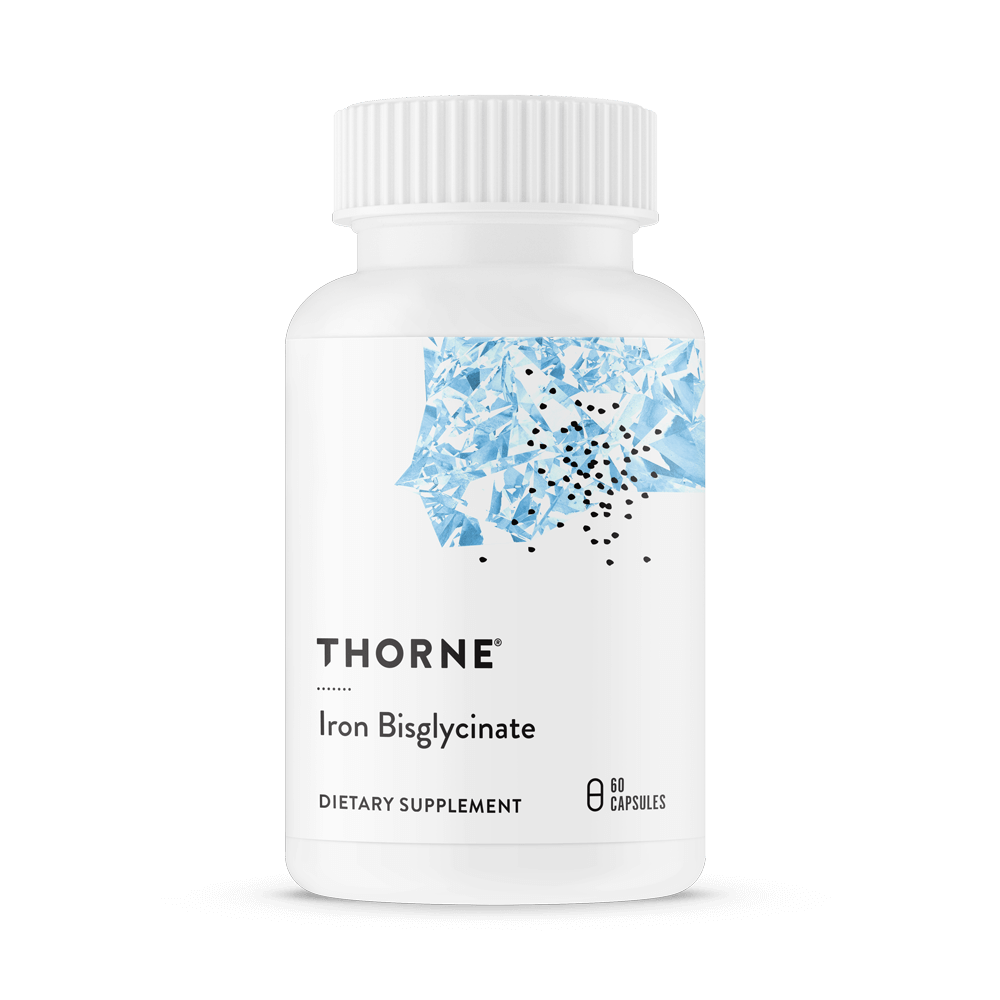
Thorne Iron Bisglycinate passes all four: it discloses 25mg of elemental iron per capsule, names Ferrochel as its chelate source, carries NSF Certified for Sport testing, and is a single-ingredient capsule with no competing minerals added.
A single-ingredient, 25mg elemental iron capsule using the named Ferrochel chelate, NSF Certified for Sport — docked slightly because the “different absorption pathway” framing common to this category oversells what the underlying research actually supports.
FAQs
Is iron bisglycinate actually absorbed better than ferrous sulfate?
Not through a different pathway — a direct comparison study found the chelate competes with ferrous sulfate for the same nonheme-iron absorption route rather than bypassing it. The realistic benefit is tolerability: if a gentler form means you actually finish the bottle instead of quitting from nausea, you absorb more total iron over time even without a higher per-dose ceiling.
Why does my iron supplement upset my stomach?
Ferrous salts like ferrous sulfate release free iron ions that react directly with the intestinal lining, causing the irritation behind common complaints like nausea, cramping, and constipation. Chelated forms keep the iron bound until closer to the point of absorption, which is the main reason they tend to sit better.
Should I take iron every day or skip days?
Research on ferrous sulfate found that spacing doses every other day, rather than daily or split through the day, roughly doubled total iron absorbed compared with the same amount taken on consecutive days — because each dose triggers a hepcidin spike that blocks absorption from a second dose taken too soon after. Ask your doctor or pharmacist whether that schedule makes sense for your specific dose and bloodwork.
Can I take iron with orange juice or vitamin C?
Yes — vitamin C converts iron into a form the gut absorbs more readily, so pairing a dose with orange juice or a vitamin C supplement can meaningfully help. Avoid taking iron at the same time as coffee, tea, dairy, or calcium supplements, all of which work against absorption.
The best candidate for switching to a chelated form is someone with a blood-test-confirmed low ferritin or mild anemia who has already tried ferrous sulfate and quit it because of GI side effects — not someone self-diagnosing fatigue and reaching for iron as a first guess. Get bloodwork before starting any iron supplement, and talk to a doctor first if you take levothyroxine or certain antibiotics (iron blocks their absorption if timed too close together), or if hemochromatosis runs in your family.
As an Amazon Associate, The Health Verdict earns from qualifying purchases. This article is educational and is not medical advice — talk to your doctor before starting any new supplement, especially iron, which can be dangerous in excess and should only be started after bloodwork confirms you actually need it.