Folic Acid vs. Methylfolate: Why the Form of Your Vitamin B9 Determines Whether Your Body Can Use It
Folic acid has to clear two separate enzyme conversions before your body can use it for anything — and for a meaningful share of people, the second one runs slow.
Folic acid is not, on its own, a molecule your body can actually use. It’s a synthetic, fully oxidized form of vitamin B9 that doesn’t occur in nature — the version added to fortified flour, breakfast cereal, and most standard multivitamins because it’s cheap and shelf-stable. Before it can do any of the things folate is actually for — building red blood cells, methylating DNA, helping clear homocysteine from the blood — it has to pass through a short enzymatic assembly line: first reduced to dihydrofolate and then tetrahydrofolate by an enzyme called DHFR, and finally converted to L-5-methyltetrahydrofolate, or 5-MTHF, by an enzyme called methylenetetrahydrofolate reductase — MTHFR for short. 5-MTHF is the form that actually circulates in your blood and gets used inside your cells.
Most people run that conversion well enough without ever thinking about it. But a common variant in the MTHFR gene itself, known as C677T, slows the final step down. People carrying two copies of the variant can see MTHFR enzyme activity drop by somewhere in the neighborhood of 60–70%; people with a single copy typically run at a more modest deficit. How common this is varies a lot by ancestry — some populations run meaningfully higher rates of the two-copy version than others — but across the board, a large enough share of people carry at least one copy that "just take folic acid" isn’t a universally complete instruction.
Methylfolate sidesteps the issue by being the finished product. It’s the same 5-MTHF your liver would eventually produce from folic acid if every step worked at full speed, supplied directly — so it needs neither DHFR nor a fully functional MTHFR enzyme to become usable. The pitch isn’t that folic acid is dangerous or pointless for most people eating a typical diet; it mostly isn’t. It’s that methylfolate removes a rate-limiting step some people don’t have the enzymatic bandwidth to clear quickly, without requiring anyone to know in advance whether they’re one of them.
Who Actually Needs This
The clearest case for choosing methylfolate over folic acid belongs to anyone who already has an MTHFR variant on record — from a clinician-ordered genetic panel, a naturopath’s workup, or a 23andMe raw-data file run through a third-party interpreter — particularly a homozygous C677T result. A close second is anyone with elevated homocysteine on a routine metabolic panel, since a sluggish folate-to-methylfolate conversion is one of the more common, and more fixable, contributors to that finding.
A broader, softer case applies to people who are pregnant or planning to be (where adequate functional folate is tied to neural tube development earlier in pregnancy than most people realize), anyone taking methotrexate or certain anti-seizure medications that interfere with folate metabolism, and people who’ve been taking high-dose folic acid for years with no blood work to confirm it’s actually accomplishing anything. None of this means folic acid is a problem for the average person with a typical diet and no relevant medications. It means methylfolate removes a variable that’s otherwise invisible without a genetic test.

Dosing: What the Numbers on the Bottle Actually Mean
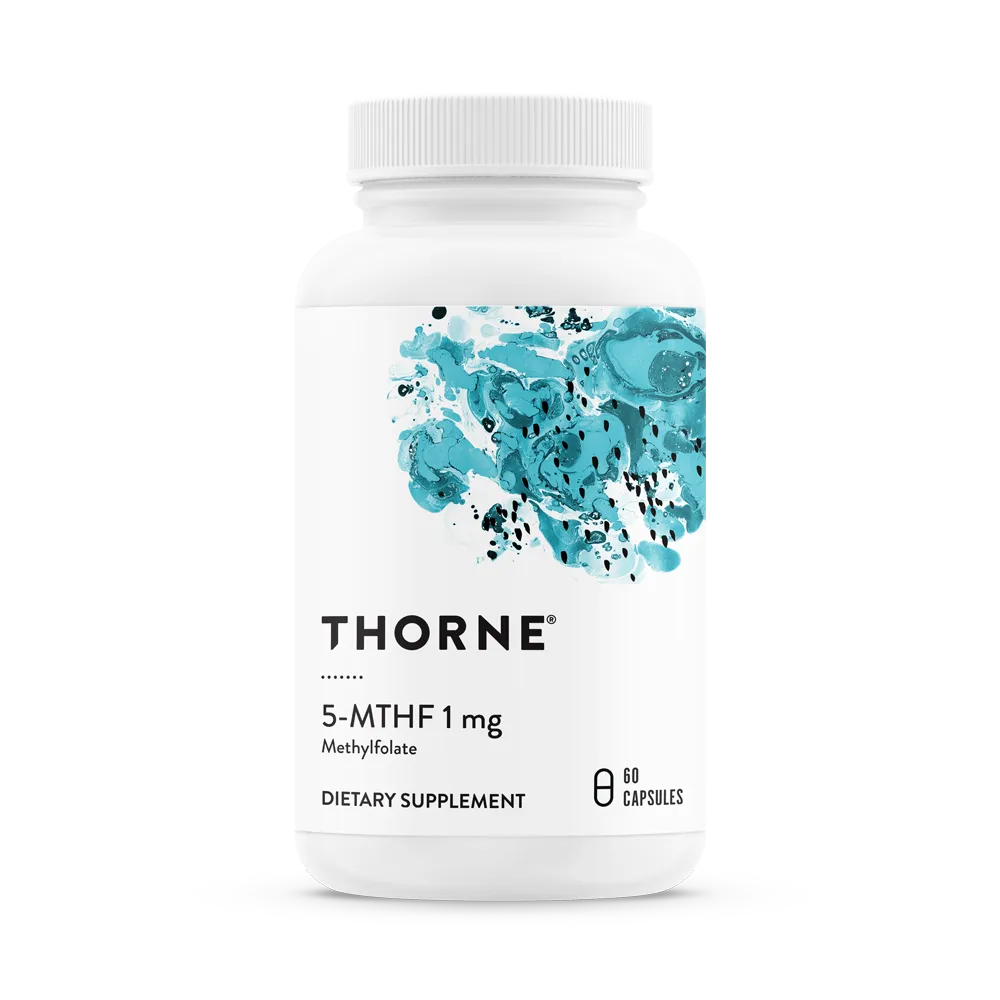
Methylfolate doses are usually written directly in mcg or mg of 5-MTHF, which creates its own labeling wrinkle. The FDA requires folate content to be listed in Dietary Folate Equivalents (DFE), a unit that multiplies any non-food folate — both methylfolate and folic acid, taken as a supplement rather than from a meal — by 1.7 to account for how much more efficiently it’s absorbed than folate occurring naturally in food. So a capsule marketed as "5-MTHF 1 mg" can legitimately show "1.7 mg DFE" on the supplement-facts panel just above it. That’s not a stealth upcharge or a labeling error; it’s the same regulatory math every non-food folate source has to use, methylfolate included.
The adult RDA sits at 400 mcg DFE (600 mcg during pregnancy), and the tolerable upper limit of 1,000 mcg DFE a day applies specifically to synthetic folic acid — a ceiling set because of concerns about unmetabolized folic acid accumulating in the blood at high intakes, not because methylfolate carries the identical risk. Most standalone methylfolate products on the market run from 400 mcg up through 1 mg (1.7 mg DFE) per capsule for general use. Prescription-strength "medical food" versions exist at 7.5–15 mg for specific clinical purposes, such as an adjunct to antidepressant treatment — a different use case entirely, and not one to self-prescribe into.

Folic Acid vs. Methylfolate: What Changes
Switching from folic acid to methylfolate doesn’t change how much folate shows up on a blood test taken a month later — comparison studies generally find total serum folate rises about as fast, or faster, on methylfolate as on an equivalent dose of folic acid. What changes is what’s circulating in the meantime. Folic acid supplementation, especially layered on top of the fortified grains most Americans already eat, tends to leave some amount of unconverted — "unmetabolized" — folic acid in the bloodstream, while methylfolate, already in its final form, doesn’t have that same metabolic queue to clear. For most people that’s an interesting technical difference with no symptoms attached to it either way. For someone with reduced MTHFR activity, it’s closer to a bottleneck actually being removed.
What to Look For in a Methylfolate Product
Methylfolate supplements vary more than the simple mcg-per-capsule number on the front of the bottle suggests. Four things are worth checking before that number tells you much:
- The exact form named on the label. "L-5-MTHF," "L-methylfolate," "Metafolin," and "Quatrefolic" are all legitimate, bioactive forms of 5-MTHF (the last two are patented, stability-tested versions); a label that just says "folate" without naming the specific compound is more often a sign of thin sourcing documentation than a sign the ingredient itself is wrong.
- Whether the DFE math adds up. A capsule listing 1 mg of methylfolate should show roughly 1.7 mg DFE on the supplement-facts panel, following the standard 1.7× non-food-folate conversion factor. A number that’s dramatically off in either direction is worth a second look at the rest of the label.
- Third-party manufacturing oversight. Few single-ingredient methylfolate products carry banned-substance-specific certifications like NSF Certified for Sport — that program exists for athletes screening for contaminants that have nothing to do with a B-vitamin — but a manufacturer whose facility is NSF cGMP-registered or independently GMP-audited is operating under a meaningfully higher level of outside oversight than a brand making unverifiable "quality tested" claims with nothing behind them.
- Fillers that matter to sensitive stomachs. Because the active dose is measured in milligrams, methylfolate capsules are mostly filler by volume. Simple cellulose-based capsules and minimal binders are the norm among better brands, while unnecessary dyes or allergen-adjacent fillers like soy and gluten show up more often in budget private-label versions.
Thorne’s 5-MTHF clears the first and third of those checks cleanly — it names its exact folate form rather than hiding behind a generic "folate" label, and its manufacturer’s facility carries NSF cGMP registration rather than an unverifiable in-house quality claim — while sitting on the plainer, less metabolically fraught side of the dosing question most people shopping in this category actually need to think about.
A correctly dosed, clearly labeled single-ingredient methylfolate capsule from a manufacturer with real facility-level quality oversight — a solid pick for anyone switching off folic acid, though it’s not a substitute for testing if you actually carry an MTHFR variant.
FAQs
Do I need genetic testing before switching to methylfolate?
Not strictly. Methylfolate is safe for people without an MTHFR variant too, since it’s simply further along the same metabolic pathway the body would otherwise complete on its own. Testing — through a clinician-ordered panel or a raw genetic-data interpretation — is most useful if you want to understand why switching helped, or if you have elevated homocysteine and want a likely explanation.
Can taking too much methylfolate cause problems?
There’s no established tolerable upper limit for methylfolate the way there is for synthetic folic acid, largely because the unmetabolized-folic-acid concern that set that limit doesn’t apply to a form that’s already fully processed. That doesn’t make unlimited amounts pointless to avoid; very high, clinical-strength doses are taken under medical supervision for specific conditions, not as a general-wellness habit.
Does methylfolate interact with any medications?
Yes, most notably methotrexate, which works partly by blocking folate metabolism — taking methylfolate alongside it can blunt the drug’s intended effect. Anyone on methotrexate for cancer treatment or an autoimmune condition should talk to their prescriber before adding any folate supplement, active or not. Certain anti-seizure medications can also interact with folate status.
Is methylfolate the same thing as folinic acid?
No, though the two get confused often. Folinic acid (also sold as leucovorin) is another active folate form, but it sits one step earlier in the pathway than 5-MTHF and still needs an enzymatic conversion — through a different route than MTHFR — to become fully usable. It bypasses the DHFR step folic acid needs, but not the specific bottleneck methylfolate skips entirely.
If you’ve been taking a standard multivitamin with folic acid for years, there’s probably no reason to switch on this information alone — most people convert it just fine. But if you’ve had unexplained elevated homocysteine, a confirmed MTHFR variant, or you’re planning a pregnancy and want one less variable to account for, swapping the folic acid in your routine for a methylfolate capsule like this one is a low-risk, well-supported change — just don’t assume a bigger number on the bottle automatically means a bigger benefit.
As an Amazon Associate, The Health Verdict earns from qualifying purchases. This article is educational and is not medical advice — talk to your doctor before starting any new supplement, especially if you take methotrexate or another medication that affects folate metabolism.