Delayed-Release Capsules vs. Acid-Resistant Strains: What Actually Gets a Probiotic to Your Gut Alive
Most probiotic marketing points at the capsule. The research points earlier — at which strain was picked before the capsule was ever designed.
Your stomach is built to kill things. On an empty stomach, gastric fluid typically sits around pH 1.5 to 3 — acidic enough to denature proteins and rupture bacterial cell membranes within minutes. Every probiotic capsule a person swallows has to get its live organisms through that environment before they ever reach the intestine, where they’re actually meant to work. A label’s CFU count is measured at the factory, not at the finish line, and what survives the trip in between is where most of the real variation between products happens.
Two different engineering answers to that problem have shown up in the probiotic aisle. One protects the capsule itself: delayed-release or enteric-coated shells, often built from a pH-sensitive polymer, that are designed to stay closed through the stomach’s acidic environment and only start dissolving once they reach the intestine’s higher pH. The other protects nothing extra and instead picks organisms that are already tough — strains selected specifically because their own cell walls and membranes hold up reasonably well against acid and bile without any special packaging at all.
Those are genuinely different strategies, and a label can lean on either one, both, or neither without saying so plainly. A “25 billion CFU” claim on its own tells you nothing about which path — if either — the manufacturer is actually relying on to get those organisms to your gut alive.
Who actually needs to think about this
If you’re taking a probiotic casually for general digestive support, the acid-survival question matters less — you’re playing a numbers game, and some fraction of a large dose getting through is probably fine. It matters a lot more if you’re taking a single targeted strain for a specific reason: rebuilding gut flora after a course of antibiotics, managing a diagnosed condition your doctor is tracking, or using a strain with published clinical research behind a specific dose. In those cases, a strain that mostly dies in your stomach isn’t delivering the dose the research was actually testing.
It also matters more than most labels suggest when you’re comparing two products by CFU count alone. A bigger number measured at the factory door is a weak signal if one product’s organisms are acid-fragile and unprotected while the other’s are either coated or inherently tough. The honest comparison isn’t CFU vs. CFU — it’s survival mechanism vs. survival mechanism, with CFU count as only one input.
How much timing and acid exposure actually matter
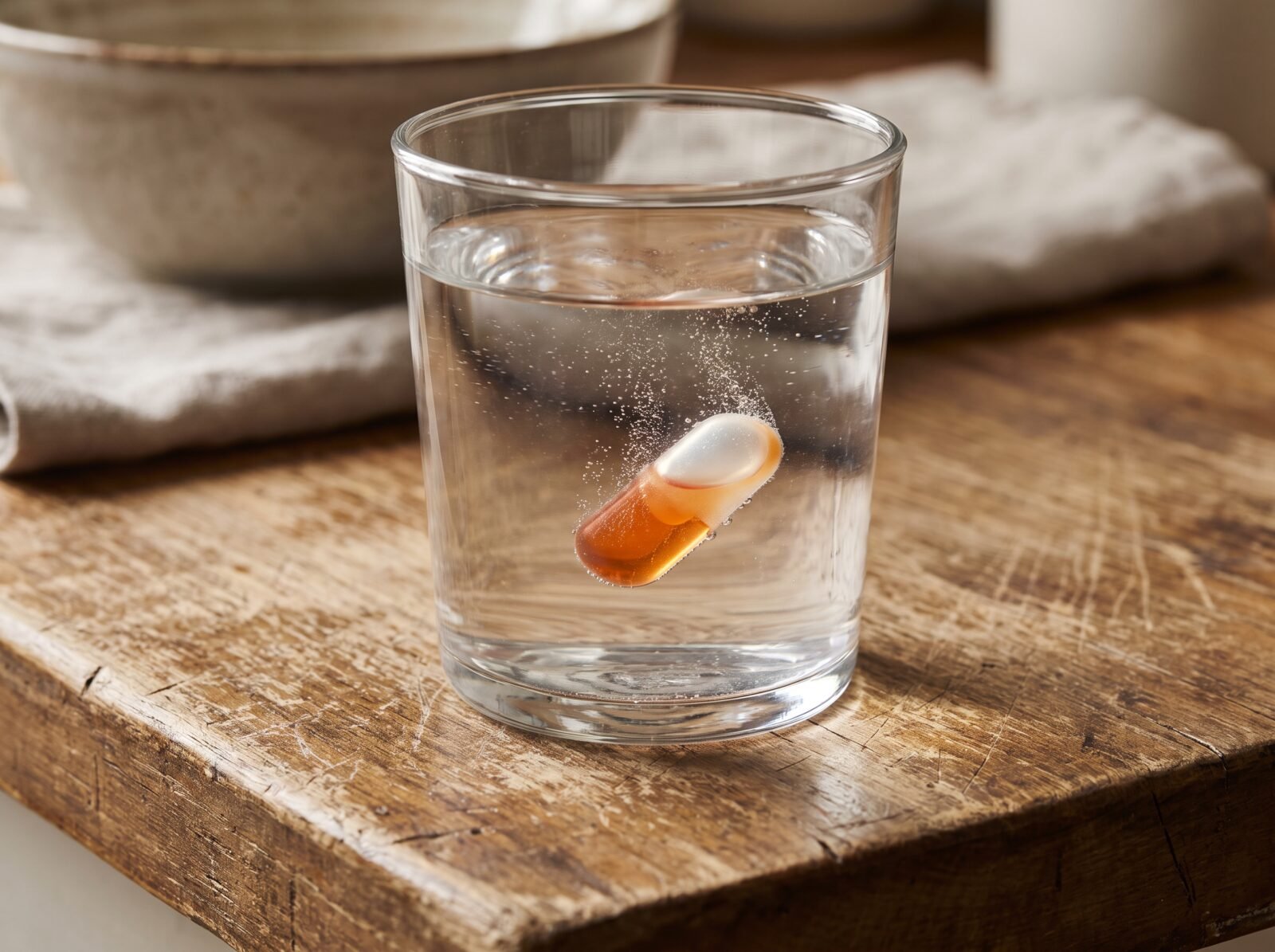
Stomach pH isn’t fixed — it swings with what’s in your stomach. Fasting, it typically runs pH 1.5 to 3, about as hostile as the GI tract gets. After a meal, especially one with some fat in it, pH can rise to 4 to 6 for an hour or two as food buffers the acid and slows gastric emptying. A controlled human trial (Tompkins et al., British Journal of Nutrition, 2011) compared probiotic survival when strains were taken with water on an empty stomach versus roughly 30 minutes before a fat-containing meal, and found survival was substantially higher — in some strains by a meaningful order of magnitude — in the before-a-meal condition. Timing isn’t a minor footnote here; it can matter more than which capsule the organism shipped in.
Strain identity matters just as much as timing. Acid tolerance isn’t a property of “probiotics” generically — it varies by genus and by specific strain. Lactobacillus rhamnosus GG and several other well-studied Lactobacillus strains are comparatively acid- and bile-tolerant on their own. Bifidobacterium species, as a genus, tend to be more acid-sensitive and benefit more from either protective packaging or being dosed with food. This is why a strain-by-strain acid-resistance claim is a more useful thing to look for than a blanket “our probiotic survives stomach acid” line that doesn’t say which organisms it’s actually talking about.
Delayed-release capsules vs. acid-resistant strains: what actually changes
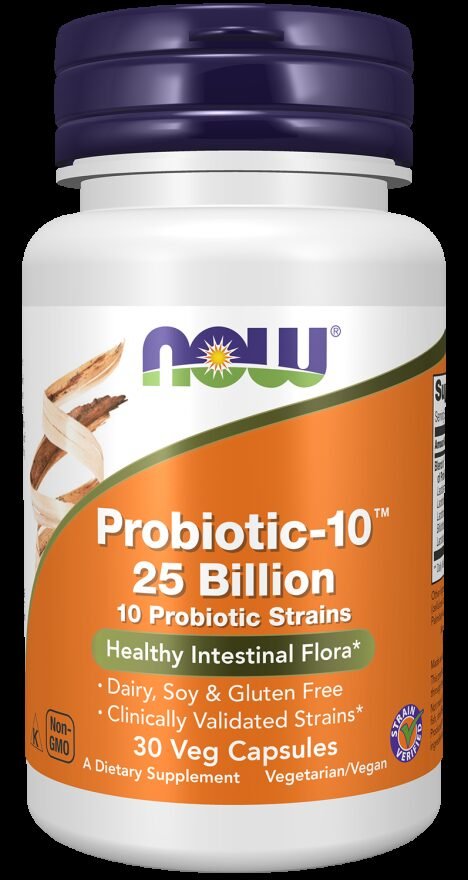
A delayed-release or enteric-coated capsule is a packaging fix: independent imaging studies on pH-triggered capsule shells, including scintigraphic tracking published by capsule manufacturer Capsugel, have shown these shells reliably stay closed through the stomach and open once they reach the intestine, regardless of which organism is sealed inside. Acid-resistant strain selection is a biology fix instead: the organism’s own cell wall and acid-tolerance genes do the work, so no special shell is needed, but the brand is then limited to strains that are naturally tough enough. NOW Probiotic-10 takes the second path — its label describes its ten strains as acid-resistant by nature and makes no delayed-release or enteric-coating claim about the capsule itself, which means its entire survival case rests on strain selection, not on any packaging technology.
What to look for in a probiotic product
A few concrete checks, ordered by how often we see products fail them:
- The potency claim is independently verified, not just internally tested. NSF or USP verification means an outside lab confirmed the actual CFU count in the bottle. A brand’s own in-house identity or potency testing is a real step, but it’s a weaker claim than third-party verification.
- The label actually answers the acid-survival question. Either a named delayed-release or enteric-coating technology, or named strains with a documented acid-resistance basis — not silence on how the organisms are supposed to survive the trip.
- CFU count is guaranteed through the expiration date, not just at manufacture. Potency declines in storage; “25 billion CFU at time of manufacture” and “25 billion CFU through the best-by date” are different promises.
- Strains are named down to species and strain designation. “Proprietary probiotic blend” with no strain names is not something you, or any researcher, can actually evaluate.
NOW Probiotic-10 names all ten of its strains on the label, states its 25 billion CFU count is guaranteed through the best-by date rather than only at manufacture, and is made in a facility that carries NOW’s GMP Quality Assured certification, independently audited by the Natural Products Association. It also directly addresses the acid-survival question by describing its strains as acid-resistant, rather than staying silent on the point. Where it falls short of the top check: its strain-identity testing uses in-house DNA fingerprinting, not an outside NSF- or USP-style potency verification of the finished bottle.
Ten clearly named, acid-resistant strains with a CFU guarantee through the best-by date and a GMP-audited facility — held back only by relying on in-house testing instead of independent third-party potency verification.
FAQs
Does a probiotic need a delayed-release capsule to work?
No — it’s one of two valid approaches, not a requirement. A delayed-release or enteric-coated shell protects any strain sealed inside it, including fragile ones. Naturally acid-resistant strains don’t need that protection because their own biology holds up against stomach acid. What matters is that one of the two is actually true for the product you’re taking, not which one.
Should I take my probiotic with food or on an empty stomach?
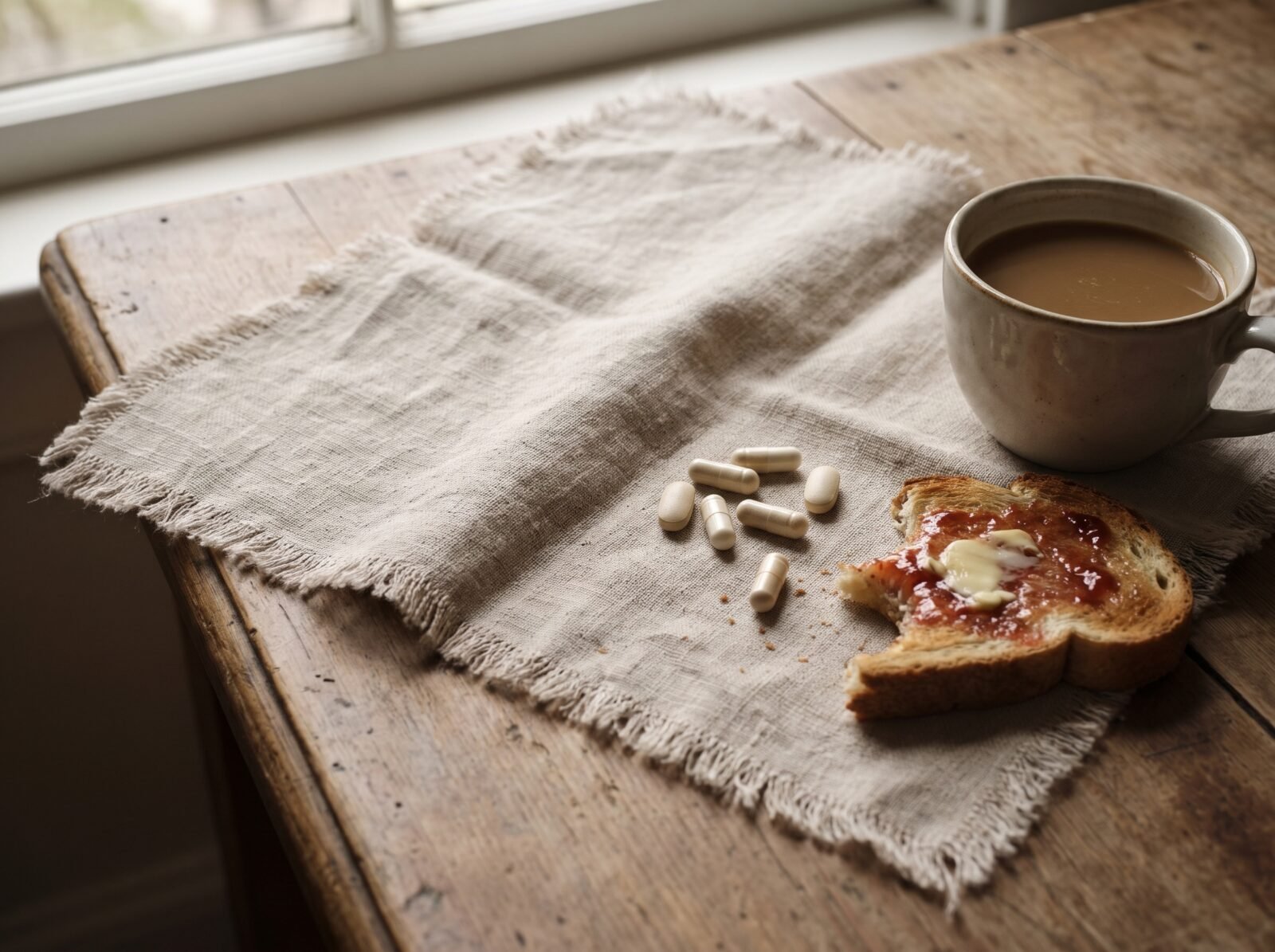
For most strains without special capsule protection, taking it with or just before a meal that contains some fat measurably improves survival through the stomach, per controlled human research. If your product specifically states it’s designed for empty-stomach use, follow that label instead — but absent that instruction, pairing it with food is the safer default.
Does a shelf-stable probiotic like this one need refrigeration?
Not necessarily. Many current formulations, including NOW Probiotic-10, are formulated and packaged to remain shelf-stable at room temperature through their best-by date. Keeping any probiotic in a cool, dry place out of direct sunlight still helps preserve potency, but check your specific product’s label rather than assuming refrigeration is required.
Is a higher CFU count always the better choice?
No. A high CFU count measured at the factory says nothing about how many of those organisms are still alive by the time they reach your gut. A lower, honestly disclosed CFU count paired with a real survival mechanism — acid-resistant strains or a delayed-release capsule — can outperform a bigger number with no protection at all.
If you’ve been choosing a probiotic by CFU count alone, the more useful filter is whether the label tells you how it gets live organisms to your gut — capsule engineering, strain selection, or neither. NOW Probiotic-10 covers the strain-transparency side of that question clearly; just don’t mistake its in-house DNA-identity testing for independent third-party potency certification.
As an Amazon Associate, The Health Verdict earns from qualifying purchases. This article is educational and is not medical advice — talk to your doctor before starting any new supplement, especially if you have a compromised immune system, a serious underlying health condition, or are currently taking antibiotics.